
The best nutrition for heart health is an eating pattern, not a single food or pill: plenty of vegetables, fruit, legumes, whole grains and nuts, unsaturated oils such as olive or rapeseed oil, oily fish or algae oil, and less salt, saturated fat, sugar, processed meat and alcohol. A handful of nutrients have authorised heart-related claims, among them EPA and DHA, thiamin and potassium. Together with regular exercise, not smoking and knowing your blood pressure, this is what research consistently links with a healthy heart.
Key facts about heart-healthy nutrition
- Salt: the WHO recommends less than 5 g a day (about one level teaspoon); most adults in Switzerland eat about 9 g.
- Fats: saturated fat should provide less than 10% of daily energy. Replacing saturated with unsaturated fats contributes to the maintenance of normal blood cholesterol levels.
- Fibre: at least 30 g a day (D-A-CH). 3 g a day of oat or barley beta-glucan contributes to the maintenance of normal blood cholesterol levels.
- Omega-3: 250 mg of EPA and DHA a day contributes to the normal function of the heart, roughly one to two portions of oily fish a week or an algae oil.
- Exercise: 150 to 300 minutes of moderate activity a week (WHO).
- Blood pressure counts as high from 140/90 mmHg; have it checked regularly, even if you feel well.
What is the best diet for heart health?
The best-studied heart-healthy diet is the Mediterranean diet. It is built on vegetables, fruit, legumes, whole grains, nuts and olive oil, with fish several times a week and little red or processed meat. In the large Spanish PREDIMED trial, people at high cardiovascular risk who followed it with extra olive oil or nuts had fewer heart attacks and strokes than a comparison group advised to eat a low-fat diet.
A well-planned vegetarian or vegan diet shares many of these features: it is rich in fibre and unsaturated fat and naturally low in saturated fat and cholesterol. Studies link plant-based diets with lower LDL cholesterol. If you eat vegan, plan for vitamin B12 and think about an algae oil for EPA and DHA.
Whatever style you choose, the principles are the same:
- fill half your plate with vegetables and fruit;
- choose whole grains and legumes over refined starches;
- cook with olive or rapeseed oil instead of butter or coconut fat;
- eat a small handful of unsalted nuts most days;
- keep processed meat, salty snacks, sugary drinks and alcohol occasional.
Which foods support heart health?
Heart-friendly foods are those that bring fibre, unsaturated fat, potassium and plant compounds while keeping salt and saturated fat low. The table gives an overview.
| Food group | Why it helps | Practical amount |
|---|---|---|
| Vegetables and fruit | Fibre, potassium, vitamin C, polyphenols | 5 portions a day (3 vegetables, 2 fruit) |
| Oats and barley | Beta-glucan for normal blood cholesterol levels | 3 g beta-glucan, about 75 g of oat flakes |
| Legumes | Fibre and protein with little fat | Several times a week |
| Nuts and seeds, walnuts, linseed | Unsaturated fats, ALA | A small handful (about 25 g) a day |
| Olive and rapeseed oil | Unsaturated fats instead of saturated | 2 to 3 tablespoons a day |
| Oily fish or algae oil | EPA and DHA | 1 to 2 portions a week, or about 250 mg a day |
Berries, red grapes and cranberries
Dark berries and grapes are rich in polyphenols such as anthocyanins. They fit well into a heart-friendly diet as part of your fruit portions, but no heart claim is authorised for them. Our articles on red grapes and what research says about heart and brain health and on cranberry supplements look at the evidence in more detail.
How much salt, fat and sugar in a heart-healthy diet?
- Salt (sodium): under 5 g of salt, or 2 g of sodium, a day. Reducing sodium intake contributes to the maintenance of normal blood pressure. About three quarters of the salt we eat comes from bread, cheese, processed meat and ready meals, so labels matter more than the salt shaker.
- Saturated fat: under 10% of energy, about 20 to 22 g a day for most adults. Main sources are butter, cream, fatty cheese, sausages, pastries and coconut or palm fat.
- Dietary cholesterol: for most people it matters less than saturated fat; eggs in moderation are fine in a balanced diet.
- Sugar: free sugars under 10% of energy, ideally under 5%, which is about 25 g a day. One can of soft drink already contains about 35 g.
- Alcohol: less is better. Do not start drinking for your heart.
Which vitamins and minerals are good for the heart?
Only a few nutrients have authorised claims that relate directly to the heart and blood vessels. A varied diet usually provides them; supplements are useful mainly when the diet falls short.
| Nutrient | Authorised claim (EU/CH) | Good food sources |
|---|---|---|
| EPA and DHA (omega-3) | Contribute to the normal function of the heart (from 250 mg a day) | Salmon, herring, mackerel, algae oil |
| Thiamin (vitamin B1) | Contributes to the normal function of the heart | Whole grains, legumes, sunflower seeds |
| Potassium | Contributes to the maintenance of normal blood pressure | Vegetables, potatoes, legumes, bananas, dried apricots |
| Vitamin C | Contributes to normal collagen formation for the normal function of blood vessels | Peppers, broccoli, citrus fruit, kiwi, acerola |
| Vitamins B6, B12 and folate | Contribute to normal homocysteine metabolism | Legumes, leafy greens, whole grains; B12 from animal foods or fortified foods |
More on the B vitamins is in what vitamin B1 does and in our overview of vitamin B supplements.
Do supplements protect the heart?
Not in people who already eat well. Large reviews, including the 2022 review by the US Preventive Services Task Force, found no benefit of multivitamins, vitamin E or beta-carotene for heart disease in healthy adults. A supplement can close a gap, for example vitamin B12 in a vegan diet or omega-3 if you never eat fish, but it does not replace a heart-friendly diet and lifestyle. Our guide to which dietary supplements are most useful explains who benefits most.
Habits that matter as much as food
- Move: 150 to 300 minutes of brisk walking, cycling or swimming a week, plus muscle training twice a week.
- Do not smoke: stopping is the single most effective step for the heart and blood vessels.
- Know your numbers: blood pressure, cholesterol, blood sugar and waist circumference.
- Sleep and stress: regular sleep and ways to manage stress help you keep the other habits going.
Seek help at once if you have chest pain, shortness of breath or sudden weakness on one side of the body. If you take medication for blood pressure, cholesterol or blood thinning, discuss any supplement with your doctor or pharmacist first.
Where Sanbera fits in
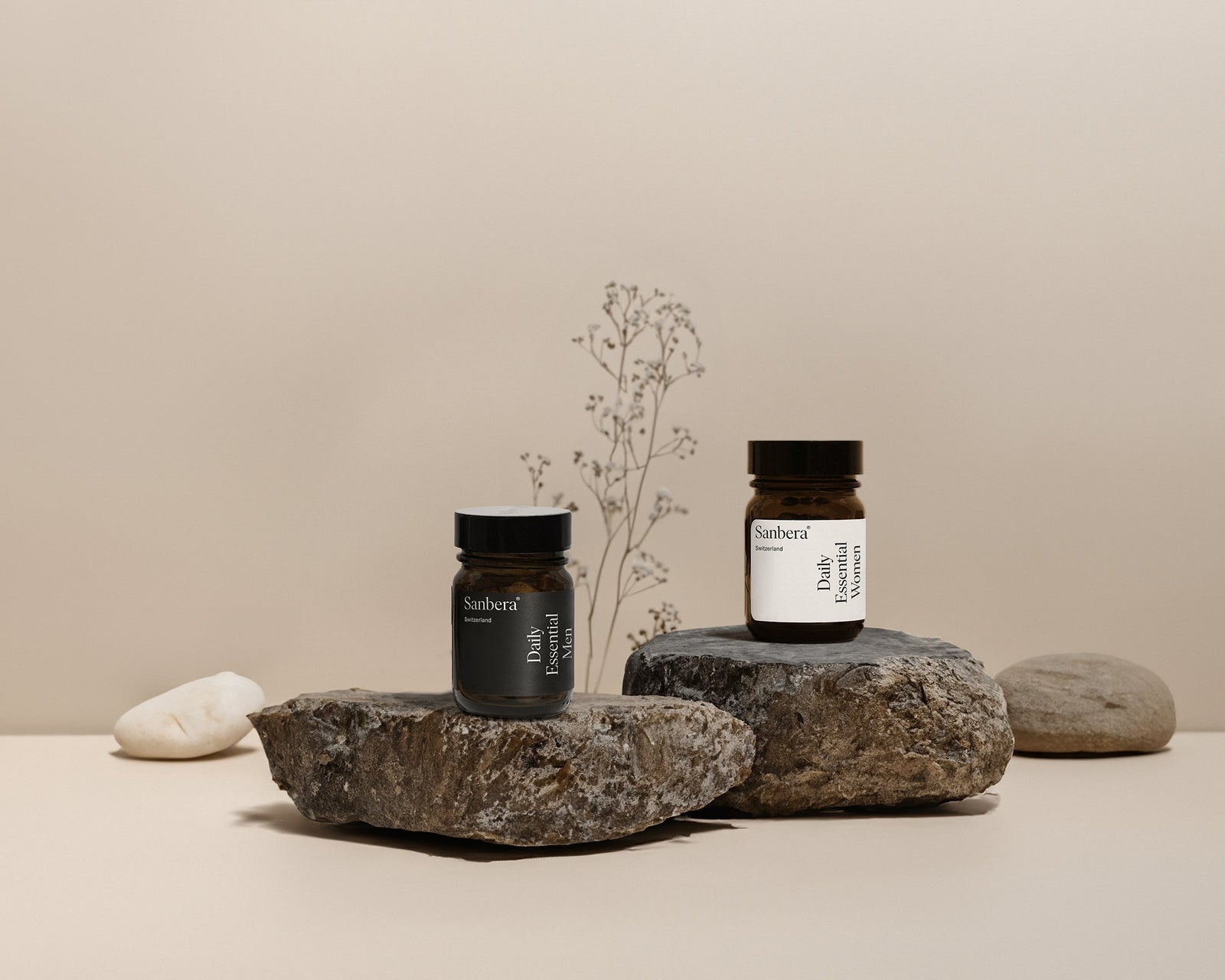
Sanbera formulas are designed to complement a balanced diet, not to replace the habits above. They contain no omega-3 and no potassium. What they do provide are vitamins with authorised claims related to the heart and blood vessels, per daily dose of three tablets:
- Thiamin: 0.83 mg (75% of the nutrient reference value) in all four formulas. Thiamin contributes to the normal function of the heart.
- Vitamin C: 43.1 mg (54%) in the women's formulas, 51.8 mg (65%) in Daily Essential Men and 64.7 mg (81%) in Nightly Reload Men, from acerola. Vitamin C contributes to normal collagen formation for the normal function of blood vessels.
- Vitamins B6, B12 and folate: for example 1.05 mg B6 (75%), 1.88 µg B12 (75%) and 150 µg folic acid (75%) in Daily Essential Women, and 1.4 mg B6 (100%), 1.88 µg B12 (75%) and 100 µg folic acid (50%) in Daily Essential Men. They contribute to normal homocysteine metabolism.
Daily Essential Men also contains guarana, a natural source of caffeine. If you are sensitive to caffeine or have a heart condition, ask your doctor before taking it.
Frequently asked questions
What is the best diet for heart health?
The best evidence is for a Mediterranean-style diet: plenty of vegetables, fruit, legumes, whole grains and nuts, olive or rapeseed oil as the main fat, fish or algae oil for omega-3, and little salt, red and processed meat, sugar and alcohol. A well-planned vegetarian or vegan diet follows the same principles and can be just as heart-friendly.
What nutrients are good for the heart?
EPA and DHA (from 250 mg a day) and thiamin contribute to the normal function of the heart. Potassium contributes to the maintenance of normal blood pressure, and vitamin C to normal collagen formation for the normal function of blood vessels. Fibre such as oat beta-glucan and unsaturated fats help maintain normal blood cholesterol levels.
How much sodium is in a heart-healthy diet?
The WHO recommends less than 2 g of sodium a day, which equals less than 5 g of salt, about one level teaspoon. Most adults eat almost twice that, mainly from bread, cheese, processed meat and ready meals. Cooking fresh, comparing labels and seasoning with herbs are the easiest ways to cut back.
Is chicken OK for heart health?
Yes, skinless chicken and other poultry fit well into a heart-healthy diet and are a better choice than red or processed meat. Prepare it by grilling, baking or poaching rather than frying, and avoid salty marinades and breaded products. Legumes, fish and tofu are good alternatives on other days.
Can vitamins protect against heart disease?
Vitamins cannot replace a heart-friendly diet. In large trials, multivitamins, vitamin E and beta-carotene did not lower the risk of heart attack or stroke in healthy adults. Supplements make sense to close a specific gap, such as vitamin B12 in a vegan diet. Thiamin contributes to the normal function of the heart.
Sources
- WHO: Healthy diet fact sheet
- WHO: Physical activity fact sheet
- Estruch R et al. Primary prevention of cardiovascular disease with a Mediterranean diet supplemented with extra-virgin olive oil or nuts. N Engl J Med 2018
- USPSTF: Vitamin, mineral and multivitamin supplementation (2022)
- Swiss Heart Foundation
- EU Register of nutrition and health claims
This article is for general information and does not replace advice from a doctor or pharmacist. Food supplements are not a substitute for a varied, balanced diet and a healthy lifestyle.