


The vitamins that matter most for your skin are vitamin A, vitamin C and three B vitamins (riboflavin, niacin and biotin), together with the minerals zinc and iodine. Under EU and Swiss law, each of them contributes to the maintenance of normal skin, and vitamin C also contributes to normal collagen formation for the normal function of the skin. Vitamin E and selenium help protect cells from oxidative stress. A varied diet covers these needs for most people; a supplement is useful to close a real gap, not to go beyond your needs.
Key facts about vitamins for the skin
- Adults need 95 mg (women) to 110 mg (men) of vitamin C a day, according to the D-A-CH reference values. 100 g of raw red pepper provides about 120 mg.
- The vitamin A reference intake is 700 µg a day for women and 850 µg for men. The safe upper limit for preformed vitamin A (retinol) is 3,000 µg a day.
- Adults need 7 to 16 mg of zinc a day, depending on sex and on how much phytate (from wholegrains and legumes) the diet contains. The upper limit is 25 mg a day.
- Vitamin E needs are about 12 mg (women) to 14 mg (men) a day. 100 g of almonds provides about 25 mg.
- Vitamin D is the only vitamin your skin makes itself, from UVB light. Even so, no authorised health claim links vitamin D to the skin.
Which vitamins are good for your skin? The short list
Many nutrients are needed for healthy skin, but only a few have an authorised EU and Swiss health claim that names the skin or protects its cells:
| Nutrient | Authorised role (EU/CH) | Daily need, adults (D-A-CH) | Good food sources |
|---|---|---|---|
| Vitamin A | Maintenance of normal skin; role in cell specialisation | 700–850 µg | Carrots, sweet potato, kale, spinach, eggs |
| Vitamin C | Normal collagen formation for the normal function of the skin; protection of cells from oxidative stress | 95–110 mg | Peppers, blackcurrants, broccoli, kiwi, citrus |
| Riboflavin (B2) | Maintenance of normal skin | about 1.0–1.4 mg | Milk, yoghurt, almonds, mushrooms |
| Niacin (B3) | Maintenance of normal skin | about 11–16 mg | Peanuts, wholegrains, legumes, fish, poultry |
| Biotin | Maintenance of normal skin | 40 µg | Eggs, oats, nuts, legumes |
| Zinc | Maintenance of normal skin; role in cell division | 7–16 mg | Pumpkin seeds, oats, lentils, cheese, meat |
| Iodine | Maintenance of normal skin | 150 µg (CH); 200 µg (DE, AT) | Iodised salt, sea fish, dairy |
| Vitamin E, selenium | Protection of cells from oxidative stress | 12–14 mg; 60–70 µg | Nuts, seeds, plant oils; Brazil nuts, fish, eggs |
Copper (nuts, wholegrains, cocoa) completes the list: it contributes to normal skin pigmentation.
Vitamin C: collagen and antioxidant protection
Collagen gives skin its structure, and your body cannot build it properly without vitamin C; a severe shortage (scurvy) shows up as fragile skin and slow wound healing. Vitamin C also contributes to the protection of cells from oxidative stress, the kind of stress that UV light and air pollution add to.
Your body does not store much vitamin C, so a regular intake matters. Good amounts per 100 g: blackcurrants about 180 mg, raw red pepper about 120 mg, raw broccoli about 90 mg, kiwi about 60 mg and orange about 50 mg. Eat some of them raw, as cooking reduces vitamin C.
Vitamin C serums act locally on the skin surface and are studied mainly for a more even-looking complexion; they do not replace vitamin C from food, and vice versa.
Vitamin A and beta-carotene
Vitamin A contributes to the maintenance of normal skin and has a role in the process of cell specialisation, the way new skin cells mature as they move to the surface. You get it in two forms: preformed vitamin A (retinol) from animal foods such as eggs, dairy and liver, and beta-carotene from colourful plants, which your body converts into vitamin A as needed. 100 g of carrots contains about 8 mg of beta-carotene.
Retinoids in creams and prescription acne medicines are related to vitamin A, but they are drugs or cosmetic ingredients with their own risks. They are not the same as dietary vitamin A.
Safety: preformed vitamin A can be harmful in high doses. Stay below 3,000 µg a day, and avoid high-dose vitamin A supplements and liver during pregnancy. Smokers should not take high-dose beta-carotene supplements. Read more in our guide to the benefits of vitamin A.
Vitamin E and selenium: protecting cells from oxidative stress
Vitamin E is fat-soluble and reaches the skin surface with sebum, where it forms part of the skin's own antioxidant defences. Vitamin E contributes to the protection of cells from oxidative stress, but it does not replace sunscreen. Good sources per 100 g: sunflower seeds about 35 mg, almonds about 25 mg and hazelnuts about 15 mg; wheat germ oil and rapeseed oil are also rich. More on this in our article on vitamin E benefits.
Selenium also contributes to the protection of cells from oxidative stress, and to the maintenance of normal hair and nails. One Brazil nut can contain 50 µg or more, so one or two are plenty; the upper limit is 255 µg a day.
B vitamins, zinc and iodine: the less famous skin nutrients
Riboflavin, niacin and biotin
Riboflavin (vitamin B2), niacin (vitamin B3) and biotin (vitamin B7) each contribute to the maintenance of normal skin. A severe niacin shortage (pellagra) first shows as rough, inflamed skin in sun-exposed areas. Such deficiencies are rare in Switzerland but can occur with very restrictive diets or heavy alcohol use. Biotin is popular as a "beauty vitamin", yet the need is only 40 µg a day and most diets cover it.
Zinc
Zinc contributes to the maintenance of normal skin, hair and nails and has a role in the process of cell division. Plant foods such as pumpkin seeds (about 7 mg per 100 g), oats and lentils (about 3.5 mg each) are good sources, but phytate in wholegrains and legumes lowers absorption. Vegans and vegetarians therefore have a higher requirement. Find out more in what are the benefits of zinc.
Iodine
Iodine contributes to the maintenance of normal skin and to normal thyroid function. In Switzerland, iodised salt is the main source. If you cook with non-iodised sea salt or eat little fish and dairy, check your intake.
Is vitamin D good for your skin?
Vitamin D is the vitamin synthesised by the skin: when UVB light reaches your skin, a cholesterol derivative is converted into vitamin D, which the liver and kidneys then activate. Vitamin D has a role in the process of cell division and contributes to the normal function of the immune system. There is no authorised claim that vitamin D maintains normal skin, so be wary of products that promise this.
In Switzerland, the sun is too low for meaningful vitamin D production between October and March, and the same UV light is the main cause of visible skin ageing. The reference intake is 20 µg a day when your skin makes none. Read what vitamin D really does for the details.
Vitamins for acne, sensitive skin and skin healing: what the evidence says
No vitamin or mineral is authorised to treat acne, pimples or inflammation. Studies have looked at oral zinc in acne, with mixed, modest results. Never take high-dose vitamin A on your own: prescription acne medicines based on vitamin A require medical supervision for good reasons.
Zinc contributes to the maintenance of normal skin, and vitamin C contributes to normal collagen formation for the normal function of skin. There is no evidence that taking more than you need helps skin problems in well-nourished people. If your skin problems persist, see a dermatologist.
How long nutrition takes to show in your skin, and whether food beats supplements, is covered in our guide skin rejuvenation supplements: what nutrition can and can't do.
Skin vitamins in Sanbera formulas
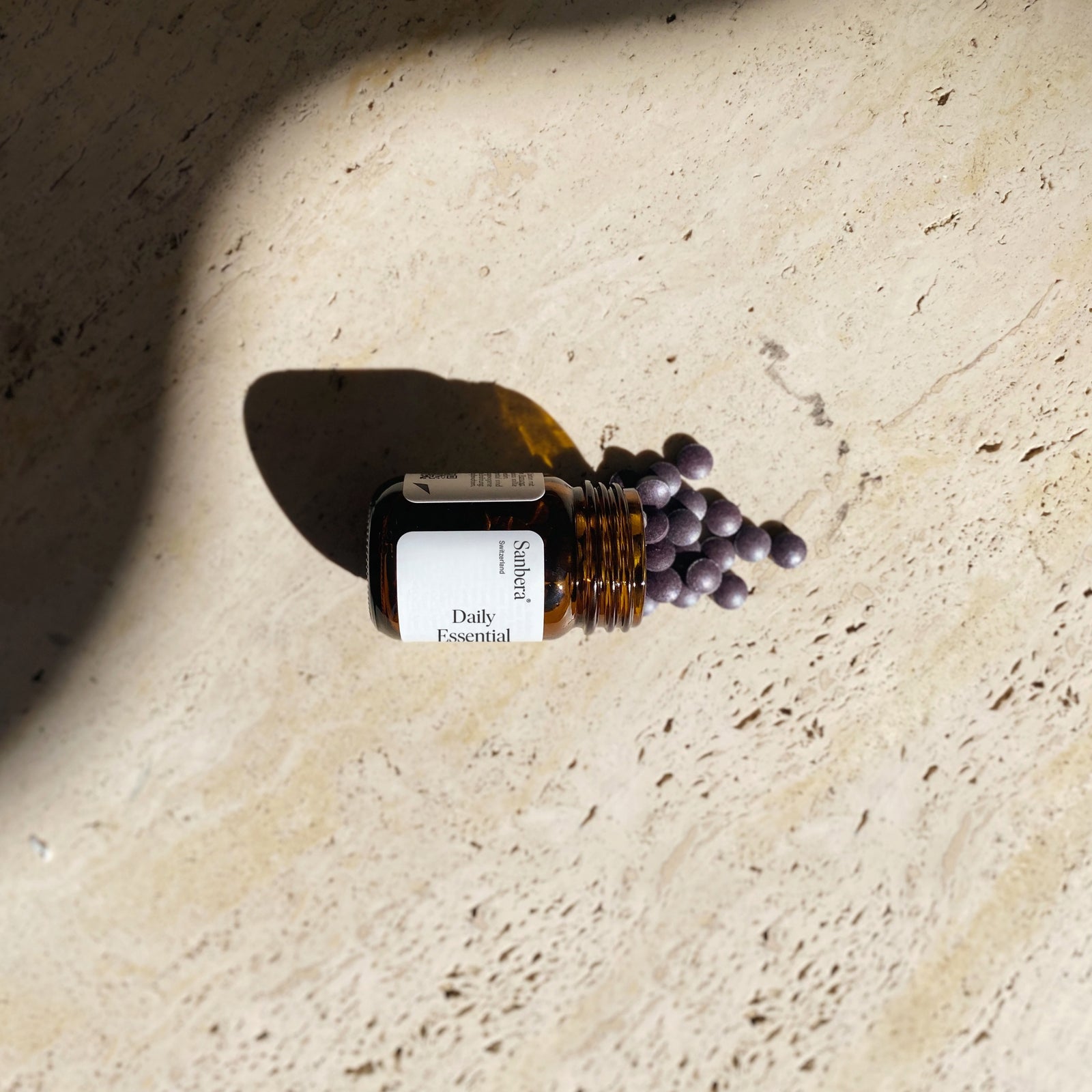
Sanbera formulas are designed to complement a balanced diet, not to replace it. The table shows the skin-related nutrients per daily dose of 3 tablets, with the percentage of the NRV.
| Nutrient | Daily Essential Women | Daily Essential Men | Nightly Reload Women | Nightly Reload Men |
|---|---|---|---|---|
| Vitamin A | 200 µg (25%) | 200 µg (25%) | – | – |
| Vitamin C | 43.1 mg (54%) | 51.8 mg (65%) | 43.1 mg (54%) | 64.7 mg (81%) |
| Vitamin E | 6 mg (50%) | 9 mg (75%) | – | – |
| Riboflavin | 1.05 mg (75%) | 1.05 mg (75%) | 1.05 mg (75%) | 1.05 mg (75%) |
| Niacin | 12 mg (75%) | 8 mg (50%) | 12 mg (75%) | 8 mg (50%) |
| Biotin | 25 µg (50%) | 25 µg (50%) | 25 µg (50%) | 25 µg (50%) |
| Zinc | 2.5 mg (25%) | 4 mg (40%) | – | – |
| Iodine | 37.5 µg (25%) | 37.5 µg (25%) | – | – |
| Selenium | 12.5 µg (23%) | 12.5 µg (23%) | – | – |
Daily Essential Women and Daily Essential Men contain all of them: their vitamin A, riboflavin, niacin, biotin, zinc and iodine contribute to the maintenance of normal skin, their vitamin C to normal collagen formation for the normal function of the skin, and their vitamin C, vitamin E and selenium to the protection of cells from oxidative stress. The Nightly Reload formulas contain no vitamin A, E or minerals. All amounts stay well below the upper limits.
Frequently asked questions
Which vitamin is best for skin?
No single vitamin is best. Vitamin C is the most studied because it contributes to normal collagen formation for the normal function of the skin. Vitamin A, riboflavin, niacin and biotin, together with zinc and iodine, each contribute to the maintenance of normal skin. A varied diet that covers all of them matters more than a high dose of one.
Which vitamins help against acne and pimples?
No vitamin is authorised to treat acne or pimples. Studies have looked at oral zinc and at vitamin D levels in acne, with mixed results. Prescription acne medicines derived from vitamin A are drugs that need medical supervision; never self-treat with high-dose vitamin A. A dermatologist can help you find the cause and the right treatment.
What vitamin is synthesised by the skin?
Vitamin D. When UVB light reaches your skin, a cholesterol derivative is converted into vitamin D, which the liver and kidneys then turn into its active form. In Switzerland, the sun is too weak for this between about October and March, so food and supplements become more important in winter.
Which vitamins are good for sensitive skin?
There is no special vitamin for sensitive skin. The same nutrients apply: vitamin A, vitamin C, riboflavin, niacin, biotin, zinc and iodine contribute to the maintenance of normal skin. Cover them through your diet, avoid high-dose supplements, and see a dermatologist if redness, itching or dryness persist.
Can you take too many skin vitamins?
Yes. Preformed vitamin A (upper limit 3,000 µg a day), zinc (25 mg), selenium (255 µg) and vitamin E (300 mg) can all cause harm in excess. Add up all supplements you take, including hair, skin and nail products. Very high biotin doses can distort some blood tests, so tell your doctor before a test.
Sources
- European Commission: EU Register of nutrition and health claims
- German Nutrition Society (DGE): D-A-CH reference values for nutrient intake
- European Food Safety Authority (EFSA): Dietary reference values and tolerable upper intake levels
- Park K. Role of micronutrients in skin health and function. Biomolecules & Therapeutics, 2015.
- Pullar JM, Carr AC, Vissers MCM. The roles of vitamin C in skin health. Nutrients, 2017.
- Linus Pauling Institute, Oregon State University: Micronutrients and skin health
This article is for general information and does not replace advice from a doctor or pharmacist. Food supplements are not a substitute for a varied, balanced diet and a healthy lifestyle.