
Recovery after breast surgery usually takes several weeks. After breast enlargement, many people take one to two weeks off work; after a breast reduction, two to three weeks. Heavy lifting and strenuous exercise are usually off limits for four to six weeks, and scars keep maturing for months. Good self-care means rest, a supportive bra, sleeping on your back, gentle walking and regular meals with enough protein. No supplement has been shown to speed up healing, and your surgeon’s instructions always come first.
This guide covers general self-care after planned breast surgery, such as enlargement, reduction or lift. Recovery after breast cancer surgery or reconstruction follows its own plan, set by your surgical and oncology team.
Key facts: breast surgery recovery
- Time off work: about 1–2 weeks after breast enlargement and 2–3 weeks after breast reduction (NHS); physically demanding jobs need longer.
- Lifting and sport: no heavy lifting or strenuous exercise for at least a month after enlargement and up to 6 weeks after reduction (NHS).
- Support bra: some surgeons recommend wearing a sports bra day and night for up to 3 months; check what yours advises.
- Driving: not for at least 1 week after enlargement, and not until wearing a seatbelt no longer hurts after reduction.
- Vitamin C: the EU reference intake (NRV) is 80 mg a day; vitamin C contributes to normal collagen formation for the normal function of skin.
- Before surgery: take nothing new, including supplements, without asking your surgeon.
How long does breast surgery recovery take?
Most people are up and walking on the day of surgery or the day after, but full recovery takes weeks. The table shows a typical course; your own timeline depends on the procedure, your health and your surgeon’s protocol.
| Time after surgery | What is typical |
|---|---|
| First days | Tiredness, tightness, swelling and pain that is managed with the pain relief you are prescribed. Short walks at home; help with daily tasks. |
| 1–2 weeks | Stitches removed if they are not dissolvable; many people return to desk work after enlargement. Pain usually eases noticeably. |
| 2–6 weeks | Gradual return to normal activity; still no heavy lifting, stretching or strenuous exercise. Swelling continues to settle. |
| 6 weeks and later | Most normal activities are possible again, including more exercise once your surgeon agrees. Scars start to fade. |
| A few months to a year | The breasts settle and look and feel more natural; scars keep maturing and slowly become paler. |
What not to do after breast surgery
- Do not lift heavy things (shopping bags, children, laundry baskets) or raise your arms high above your head until your surgeon allows it, usually for four to six weeks.
- Do not skip the support bra if one has been prescribed; it helps keep the breasts supported while the tissue settles.
- Do not smoke or vape nicotine. Nicotine narrows blood vessels and is a well-known risk factor for wound healing problems.
- Do not take baths or swim until your wounds have closed and your surgeon says it is fine; showering instructions vary by clinic.
- Do not expose fresh scars to strong sun; cover them or use high sun protection for the first year.
- Do not start new medicines or supplements without checking with your surgical team.
Housework after breast surgery
Plan help for the first one to two weeks. Light tasks at waist height, such as making a simple meal, are usually fine early on; vacuuming, carrying full laundry baskets, changing beds and reaching into high cupboards are best left for later. Move everyday items to counter height before your operation.
How to sleep after breast surgery
Most surgeons advise sleeping on your back with your upper body slightly raised for the first weeks, which can also help with swelling. A wedge pillow or a stack of pillows behind you, and a pillow under each arm, make the position more comfortable. Side and stomach sleeping usually wait until your surgeon says the tissue can take the pressure, often after several weeks. Getting in and out of bed by rolling to the side and pushing up with your legs puts less strain on the chest.
Pain, swelling and numbness: what is normal?
Pain is usually strongest in the first days and eases over one to two weeks, while tightness and occasional twinges can last longer. Swelling and bruising settle over several weeks. Changes in sensation are common: the nipple or areas of skin may feel numb or more sensitive. In many people sensation improves gradually over months as the nerves recover, but it can be permanent. No vitamin or supplement has been shown to speed up nerve recovery.
Contact your surgeon or clinic promptly if you notice fever, increasing redness, warmth or pain, discharge from a wound, one breast becoming suddenly more swollen than the other, or shortness of breath.
What to eat after breast surgery
There is no special recovery diet, but your body needs enough energy, protein, vitamins and minerals to repair tissue. The ESPEN guideline on nutrition in surgery recommends returning to normal eating as early as possible after an operation.
- Protein at every meal: legumes, tofu, tempeh, eggs, dairy or fish, nuts and seeds.
- Vegetables and fruit every day: peppers, broccoli, citrus fruit, kiwi and berries are good sources of vitamin C.
- Fibre and fluids: wholegrains, vegetables and enough water help against constipation, a common side effect of pain medication and reduced movement.
- Alcohol: best avoided while you take pain medication and in the first weeks.
Which vitamins and nutrients matter after surgery?
Vitamin C contributes to normal collagen formation for the normal function of skin, and to the normal function of the immune system. Vitamin A and zinc contribute to the maintenance of normal skin, and zinc contributes to normal protein synthesis. Protein contributes to the maintenance of muscle mass. These are normal body functions; a balanced diet usually covers them. If you eat poorly for a long time, have lost a lot of weight or follow a restricted diet, your team can check whether you need specific nutritional support.
Do recovery supplements speed up healing?
No. There is no good evidence that vitamins, magnesium, colostrum or other “recovery” supplements make wounds heal faster in people who are otherwise well nourished. Supplements can help fill a gap in the diet, but they never replace your surgeon’s instructions. Before surgery the rule is simple: take nothing new without asking your surgeon, because some supplements and herbal products can affect bleeding or interact with anaesthesia and medication. After breast cancer surgery, discuss any supplement with your oncology team, especially during radiotherapy or chemotherapy.
Emotional self-care during recovery
Breast surgery can bring relief and excitement, but also doubt, impatience or low mood while swelling hides the final result. Expect the first weeks to be a phase rather than the outcome. Short daily walks, daylight, contact with friends, and accepting help all make a difference. If low mood lasts or you feel overwhelmed, talk to your surgeon or your GP; after breast cancer surgery, breast care nurses and support services can help.
For a surgeon’s perspective on the weeks around an operation, read our interviews with plastic surgeon Prof. Jian Farhadi on preparing for surgery and spine surgeon Dr. med. Sina Havakeshian on recovery.
Where Sanbera fits, and where it does not
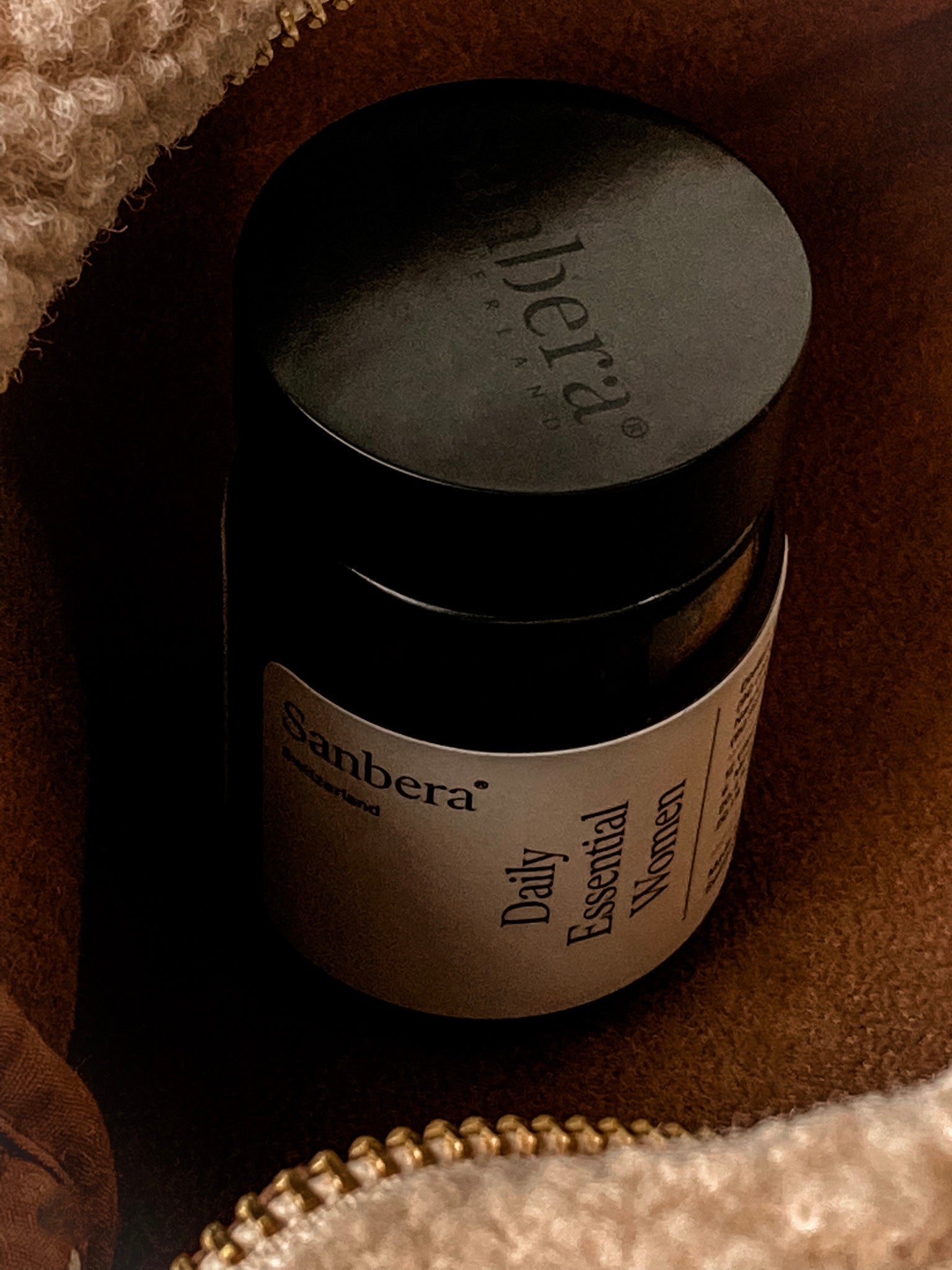
Sanbera does not make a surgery or recovery product, and our formulas do not speed up healing. If you already take a daily multivitamin, ask your surgeon whether to continue it around the operation. For everyday use, Daily Essential Women provides per 3 tablets vitamin C 43.1 mg (54 % NRV), which contributes to normal collagen formation for the normal function of skin, and vitamin A 200 µg (25 % NRV) and zinc 2.5 mg (25 % NRV), which contribute to the maintenance of normal skin. Iron 7 mg (50 % NRV) and vitamin B12 1.88 µg (75 % NRV) contribute to the reduction of tiredness and fatigue. Some of its vitamin C comes from acerola; read more about acerola as a natural source of vitamin C. A food supplement does not replace a varied, balanced diet.
For the bigger picture, see the vitamins your skin needs and which dietary supplements are actually useful, and for whom.
Frequently asked questions
How long does breast surgery recovery take?
Most people need one to two weeks off work after breast enlargement and two to three weeks after breast reduction. Heavy lifting and strenuous exercise usually wait four to six weeks, and most normal activities are possible again after about six weeks. Scars and the final shape keep settling for several months up to a year. Your surgeon’s plan always takes priority.
What should you not do after breast surgery?
Avoid heavy lifting, raising your arms high above your head and strenuous exercise until your surgeon allows them, usually for four to six weeks. Do not smoke, do not bathe or swim until the wounds have closed, protect scars from strong sun and wear the support bra as advised. Do not start new medicines or supplements without asking your surgical team.
How long after breast surgery can you lift things?
Usually after four to six weeks. The NHS advises avoiding heavy lifting and strenuous exercise for at least a month after breast enlargement and for up to six weeks after breast reduction. Light objects such as a cup or a book are usually fine earlier. Increase gradually, and ask your surgeon when lifting children or shopping bags is safe.
Which vitamins are good after surgery?
No vitamin speeds up healing, but your body needs a normal supply. Vitamin C contributes to normal collagen formation for the normal function of skin, and vitamin A and zinc contribute to the maintenance of normal skin. A diet with vegetables, fruit, wholegrains and enough protein usually covers your needs. Ask your surgeon before taking any supplement around an operation.
How can I heal faster after breast surgery?
There is no shortcut, but you can avoid slowing your recovery down. Follow your surgeon’s instructions, wear the support bra, sleep on your back, walk a little every day, eat regular meals with enough protein, drink enough, do not smoke and give yourself time. No supplement has been shown to make wounds heal faster, so take nothing new without asking your surgeon.
How should I sleep after breast surgery?
Sleep on your back with your upper body slightly raised, for example with a wedge pillow, and support each arm with a pillow. Most surgeons advise this for the first weeks; side and stomach sleeping usually wait until your surgeon agrees, often several weeks after the operation. Roll to the side and push up with your legs to get out of bed.
Sources
- NHS: Breast enlargement (implants), recovery
- NHS: Breast reduction (female), recovery
- Weimann A. et al. ESPEN practical guideline: Clinical nutrition in surgery. Clin Nutr, 2021.
- EFSA: Scientific opinion on health claims related to vitamin C, including collagen formation (2009).
- Commission Regulation (EU) No 432/2012: list of permitted health claims
This article is for general information and does not replace advice from a doctor or pharmacist. Food supplements are not a substitute for a varied, balanced diet and a healthy lifestyle.