
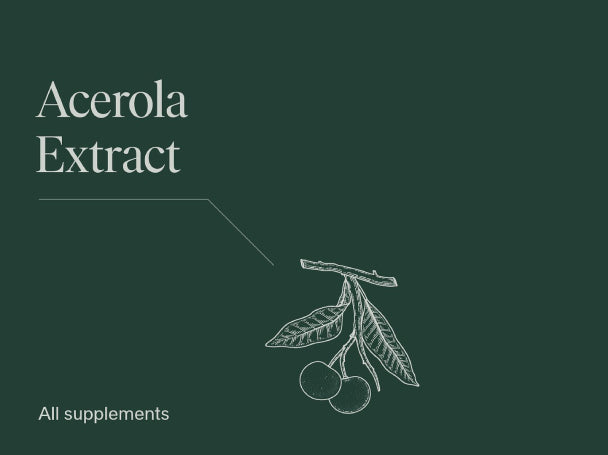

Acerola is a small red tropical fruit, also called Barbados cherry or West Indian cherry, and it is one of the richest natural sources of vitamin C: raw acerola contains roughly 1,700 mg per 100 g, about 30 times more than an orange. Its benefits come mainly from that vitamin C, which contributes to the normal function of the immune system, to normal collagen formation for the normal function of skin and to the reduction of tiredness and fatigue. Acerola itself has no authorised health claims; it is valued as a natural vitamin C source in food and supplements.
Key facts about acerola
- Botanical name: Malpighia emarginata (also listed as M. glabra or M. punicifolia). It is not a true cherry.
- Vitamin C: about 1,680 mg per 100 g of raw fruit (USDA); a single fruit of around 5 g can supply close to the full daily reference intake.
- Daily vitamin C need (D-A-CH): 95 mg for women and 110 mg for men; the label reference value (NRV) is 80 mg.
- Energy: only about 32 kcal per 100 g; the fruit is roughly 90 % water.
- Shelf life: fresh acerola spoils within a few days of picking, so most of the world's harvest is sold as juice, purée, frozen pulp or powder.
What is acerola?
Acerola grows on a bushy shrub native to the Caribbean, Central America and northern South America; today Brazil is the largest producer. The fruit looks like a small, glossy cherry and contains three hard seeds. Ripe acerola tastes sour-sweet with a slight bitter note, which is why it is rarely eaten in large amounts on its own and more often used in juices, sorbets and smoothie bowls.
Acerola became internationally known in the 1940s, when researchers in Puerto Rico measured its exceptional vitamin C content. Since then it has been used as a natural vitamin C ingredient in juices, powders and food supplements. Unripe, green fruit contains even more vitamin C than ripe red fruit, and the content falls during ripening, storage and heating.
Acerola nutrition: how much vitamin C does it contain?
The vitamin C content of acerola varies with variety, ripeness and processing, but even conservative values put it far ahead of familiar fruit and vegetables:
| Food (raw) | Vitamin C per 100 g (approx.) |
|---|---|
| Acerola | 1,680 mg |
| Rose hip | 425 mg |
| Guava | 230 mg |
| Blackcurrant | 180 mg |
| Red bell pepper | 130 mg |
| Kiwi (green) | 90 mg |
| Strawberries | 60 mg |
| Orange | 53 mg |
Beyond vitamin C, acerola provides smaller amounts of provitamin A carotenoids, potassium, magnesium and B vitamins, plus natural pigments such as anthocyanins and carotenoids that give the fruit its colour. These amounts are modest compared with the vitamin C, which is why acerola is described above all as a vitamin C source.
What does acerola do in the body?
What acerola does in the body is, in practice, what its vitamin C does. Humans cannot produce vitamin C themselves, so it has to come from food every day. In the EU and Switzerland, the following authorised health claims apply to vitamin C. Vitamin C contributes to:
- the normal function of the immune system;
- normal collagen formation for the normal function of skin, gums, teeth, bones, cartilage and blood vessels;
- the reduction of tiredness and fatigue;
- normal energy-yielding metabolism;
- normal psychological function and the normal functioning of the nervous system;
- the protection of cells from oxidative stress and the regeneration of the reduced form of vitamin E.
Vitamin C also increases iron absorption, which is useful in a plant-based diet where iron comes from legumes, grains and vegetables. Laboratory studies have also looked at the polyphenols in acerola, but there is no authorised claim for these compounds or for the fruit as such. For the bigger picture of nutrients involved in immunity, see our guide to vitamins and minerals for a healthy immune system.
Is acerola good for your skin and hair?
Skin contains high concentrations of vitamin C, and collagen is one of its main structural proteins. Because vitamin C contributes to normal collagen formation for the normal function of skin, acerola can help you reach your daily vitamin C intake, which your skin depends on like the rest of the body. There is no authorised claim that acerola, or vitamin C, improves the appearance of skin or the growth of hair, and a varied diet already covers most people's needs. Our article on the best vitamins for your skin explains which nutrients matter and why.
Acerola powder vs synthetic vitamin C: is there a difference?
The vitamin C molecule in acerola and in a tablet of synthetic ascorbic acid is the same. Studies in humans comparing food-derived and synthetic vitamin C have found that the body absorbs both equally well. The differences are elsewhere:
- Accompanying substances: acerola powder and extract also contain fruit sugars, fibre and plant pigments; synthetic ascorbic acid is the pure vitamin.
- Dose: synthetic vitamin C can be dosed precisely; the vitamin C content of acerola powders varies by product and storage, so check the amount stated on the label.
- Stability: vitamin C breaks down with heat, light, air and moisture. Keep acerola powder closed, dry and cool.
- Preference: many people choose acerola because they prefer a fruit-based ingredient, which is a matter of taste rather than of health benefit.
Acerola powder is also why you may find acerola on the ingredient list of bread or orange juice: ascorbic acid improves dough handling and protects juice colour and flavour, and acerola is used as a fruit-based alternative to adding pure ascorbic acid.
How much acerola per day is enough?
There is no separate recommendation for acerola; what counts is your total vitamin C intake. Adults need 95 to 110 mg a day, which a few fresh acerola fruits, or a small amount of acerola powder, can easily provide. Smokers need more (135 mg for women, 155 mg for men), as do pregnant (105 mg) and breastfeeding (125 mg) women.
Can you take too much acerola?
Vitamin C is water-soluble, and the body excretes what it does not need. EFSA has not set an upper limit, but notes that supplemental doses of up to about 1,000 mg a day, on top of the diet, are not associated with digestive side effects in adults, while larger doses can cause stomach cramps or diarrhoea. People with a history of kidney stones, haemochromatosis (iron overload) or kidney disease should talk to their doctor before taking high-dose vitamin C. If you are pregnant or breastfeeding, acerola as a food is fine; for supplements, ask your doctor or pharmacist.
How to eat acerola
Fresh acerola is hard to find outside the tropics because it spoils quickly. In Switzerland you are most likely to find it as:
- juice or nectar, often mixed with other fruit juices because of its sharp taste;
- frozen pulp or purée, for smoothies and sorbets;
- powder, stirred into yoghurt, muesli or drinks (add it after cooking, as heat destroys vitamin C);
- extract in food supplements, often combined with other vitamins.
Acerola is related to many other plant ingredients used in supplements; our guide to plant-based supplements and how to choose them explains what to look for on a label.
Acerola in Sanbera formulas
All four Sanbera formulas contain acerola extract as a natural vitamin C source. Per daily serving of three tablets, they provide:
| Formula | Vitamin C per 3 tablets | % NRV |
|---|---|---|
| Daily Essential Women | 43.1 mg | 54 % |
| Daily Essential Men | 51.8 mg | 65 % |
| Nightly Reload Women | 43.1 mg | 54 % |
| Nightly Reload Men | 64.7 mg | 81 % |
The vitamin C in each formula contributes to the normal function of the immune system and to the reduction of tiredness and fatigue. Daily Essential Women also contains black elderberry extract; read more about what black elderberry is and what research says. The formulas are vegan and made in Switzerland. A food supplement is not a substitute for a varied, balanced diet and a healthy lifestyle.
If tiredness is what brought you here, our guide to vitamins for tiredness and fatigue covers vitamin C alongside iron, B12 and other nutrients.
Frequently asked questions
What is acerola good for?
Acerola is good above all as a natural source of vitamin C. Vitamin C contributes to the normal function of the immune system, to normal collagen formation for the normal function of skin, to the reduction of tiredness and fatigue and to the protection of cells from oxidative stress. It also increases iron absorption from plant foods. The fruit itself has no separate authorised health claims.
Is acerola good for you?
Yes, as part of a varied diet acerola is a healthy fruit: it is low in calories and extremely rich in vitamin C, with small amounts of carotenoids and minerals. Most people tolerate it well. Very high intakes from concentrated powders or supplements can upset the stomach, so follow the dose on the label and count all your vitamin C sources together.
What is the difference between acerola and synthetic vitamin C?
Chemically there is none: acerola contains the same ascorbic acid as a synthetic tablet, and human studies show both are absorbed equally well. Acerola powder also brings fruit sugars, fibre and plant pigments, while synthetic vitamin C is pure and can be dosed more precisely. Choosing acerola is mainly a preference for a fruit-based ingredient.
Can you eat acerola raw?
Yes. Ripe acerola can be eaten raw like a cherry; just spit out the three hard seeds. It tastes sour-sweet and slightly bitter. Because fresh fruit spoils within a few days of picking, it is rarely sold fresh in Europe. Raw fruit keeps the most vitamin C, since heating and long storage break it down.
Can acerola cause diarrhoea?
Acerola as a fruit rarely causes problems, but very high vitamin C intakes, usually several grams a day from concentrated powders or supplements, can cause stomach cramps and diarrhoea. The effect disappears when you reduce the dose. Adults need only 95 to 110 mg of vitamin C a day, an amount far below the doses linked to digestive complaints.
Sources
- U.S. Department of Agriculture: FoodData Central (acerola and other food composition values)
- EFSA Panel on Dietetic Products, Nutrition and Allergies (2013): Scientific opinion on Dietary Reference Values for vitamin C
- German Nutrition Society (DGE): Reference values for vitamin C
- National Institutes of Health, Office of Dietary Supplements: Vitamin C, Health Professional Fact Sheet
- Carr AC, Vissers MCM (2013): Synthetic or food-derived vitamin C: are they equally bioavailable? Nutrients 5(11):4284–4304
- European Commission: EU Register of nutrition and health claims
This article is for general information and does not replace advice from a doctor or pharmacist. Food supplements are not a substitute for a varied, balanced diet and a healthy lifestyle.