
Biotin (vitamin B7) helps your body turn fats, carbohydrates and protein from food into usable energy, and it contributes to the maintenance of normal hair, skin and mucous membranes. Adults need about 40 µg a day, which a varied diet usually provides. Biotin does not cause weight gain and does not help you lose weight. The one real safety issue is that high-dose biotin can distort some blood tests.
Key facts about biotin
- Biotin is a water-soluble B vitamin, also called vitamin B7 and, historically, vitamin H.
- EFSA sets an adequate intake of 40 µg a day for adults (45 µg while breastfeeding). The nutrient reference value (NRV) on EU and Swiss labels is 50 µg.
- One cooked egg provides about 10 µg; 85 g of cooked beef liver about 31 µg.
- Biotin contains no calories; there is no evidence that it changes body weight.
- No upper limit has been set, but doses of 5,000–10,000 µg (5–10 mg), common in hair products, can give false results in thyroid, hormone and troponin tests.
What does biotin do for your body?
Biotin works as a coenzyme, a helper molecule, for five enzymes (carboxylases) that break down fatty acids, glucose and amino acids. Without it, your cells could not fully use the energy and building blocks in your food. Biotin is also involved in gene regulation and cell signalling.
In the EU and Switzerland, seven health claims are authorised for biotin. Biotin contributes to:
- normal energy-yielding metabolism
- normal macronutrient metabolism
- normal functioning of the nervous system
- normal psychological function
- the maintenance of normal hair
- the maintenance of normal skin
- the maintenance of normal mucous membranes
These are the real, evidence-based benefits of biotin. They describe what an adequate intake does; they do not mean that more biotin gives more benefit.
Is biotin good for you?
Yes, in the amounts your body needs, biotin is essential and well tolerated. Because you need it for energy metabolism and for normal hair, skin and nerves, a regular intake matters. Your body does not store much biotin, but a varied diet that includes eggs, nuts, seeds, wholegrains and legumes covers the need for most people.
Whether a biotin supplement is good for you depends on your diet and situation. It can make sense to close a real gap, for example in pregnancy or with a very restricted diet. For healthy people who already get enough, extra biotin has not been shown to bring additional benefits.
Does biotin cause weight gain?
No. No study has shown that biotin, at normal or high doses, makes people gain weight. A daily dose is measured in micrograms, millionths of a gram, so it adds no meaningful energy to your diet, and biotin has no known effect on appetite hormones or fat storage.
So why do so many people search for "biotin and weight gain"? People often start biotin when something else is changing: a new diet, stress, pregnancy, menopause, a new medication or less exercise. When the scales move, the newest supplement is an easy suspect. If you notice an unexplained change in weight, look at those factors first and, if it persists, speak to your doctor.
Does biotin help you lose weight?
Also no. Because biotin takes part in fat and carbohydrate metabolism, it is sometimes marketed as a "metabolism booster". Taking more than your body needs does not speed up your metabolism or burn fat, and there are no reliable human studies showing weight loss from biotin. Body weight depends on diet, activity, sleep and health status, not on a single vitamin.
How much biotin do you need per day?
Adults need about 40 µg a day, according to EFSA and the D-A-CH reference values used in Switzerland, Germany and Austria. During breastfeeding the adequate intake is 45 µg. In the United States, the adequate intake for adults is 30 µg.
Biotin is found in small amounts in many foods. Typical values per serving, based on US National Institutes of Health data:
| Food (serving) | Biotin |
|---|---|
| Beef liver, cooked (85 g) | about 31 µg |
| Egg, whole, cooked (1 egg) | about 10 µg |
| Salmon, canned (85 g) | about 5 µg |
| Sunflower seeds, roasted (¼ cup, about 35 g) | about 2.6 µg |
| Sweet potato, cooked (½ cup) | about 2.4 µg |
| Almonds, roasted (¼ cup, about 35 g) | about 1.5 µg |
| Spinach, boiled (½ cup) | about 0.5 µg |
Your gut bacteria also make some biotin, though it is unclear how much of it your body absorbs. On a plant-based diet, nuts, seeds, oats, legumes and mushrooms add up over the day.
Biotin for hair, skin and nails: what the evidence shows
Biotin is known as the "beauty vitamin", and a real deficiency does show up there: thinning hair, hair loss and a red, scaly rash around the eyes, nose and mouth. In people who are deficient, restoring biotin intake reverses these signs.
For people who already get enough, the evidence is weak. A 2017 review found that the cases where biotin helped hair involved an underlying deficiency or a rare condition; there was no good evidence for healthy people. A few small, older studies in people with brittle nails used 2.5 mg a day, but they were not designed to give firm answers. If your hair is thinning, ask your doctor to check common causes such as low iron, thyroid problems or hormonal changes. Our guide to supplements for hair and what they can do looks at all nutrients involved, and our overview of the best vitamins for your skin covers the skin side.
Who may not get enough biotin?
True biotin deficiency is rare. It is more likely with:
- biotinidase deficiency, a rare inherited condition usually found by newborn screening;
- long-term heavy alcohol use;
- regularly eating raw egg whites, which contain avidin, a protein that binds biotin and blocks its absorption (cooking destroys avidin);
- pregnancy and breastfeeding, when the body uses more biotin;
- long-term use of some anti-epileptic medicines.
Is biotin safe? Side effects and blood tests
Biotin has no established upper intake level because no harmful effects have been seen even at high intakes; your body excretes what it does not need in urine. Some people report stomach upset or skin breakouts with high-dose products, but controlled studies have not confirmed these effects.
The important exception is laboratory testing. Many blood tests use a biotin-based method, and high-dose biotin (often 5–10 mg in hair and nail products) can make results falsely high or falsely low. The US Food and Drug Administration has warned that this can cause a missed heart attack diagnosis with troponin tests. Thyroid tests are also affected: results can look like an overactive thyroid when the thyroid is normal, which matters for people with Hashimoto's or Graves' disease. Tell your doctor and the laboratory about every supplement, and ask how long to pause high-dose biotin before a test; many labs advise at least 48 hours.
Biotin in Sanbera formulas
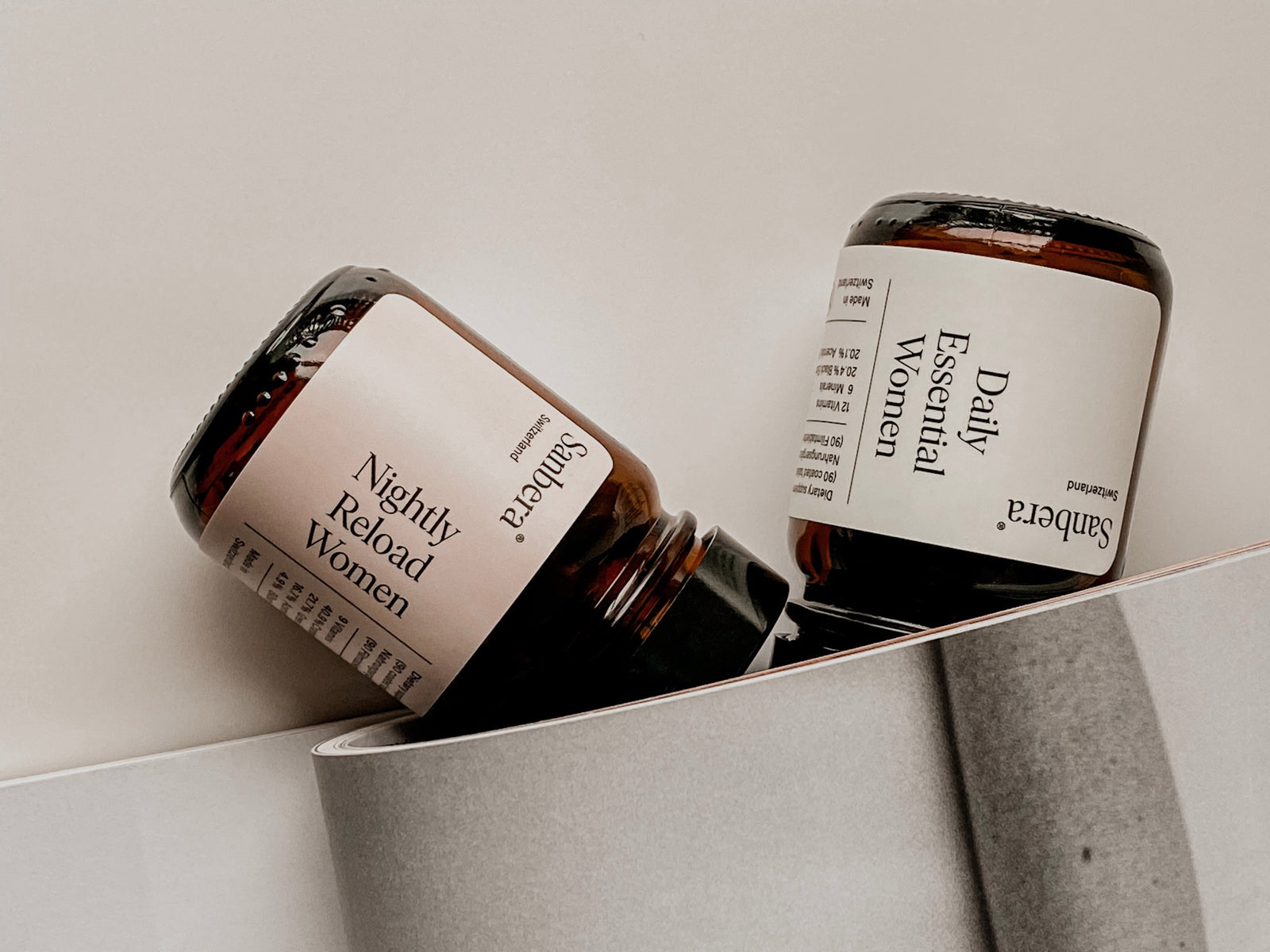
Sanbera uses biotin at nutritional levels, not the very high doses found in hair supplements. Each daily serving of 3 tablets contains 25 µg of biotin (50% of the NRV) in all four formulas: Daily Essential Women, Daily Essential Men and both Nightly Reload formulas. Taking a day and a night formula together gives 50 µg, the full NRV.
In these amounts, biotin contributes to normal energy-yielding metabolism and to the maintenance of normal hair and skin, alongside the other B vitamins in each formula. For an overview of the whole group, read our guide to what each B vitamin does.
Frequently asked questions
Does biotin give you energy?
Not directly. Biotin contributes to normal energy-yielding metabolism, so it helps your body release energy from food, but it is not a stimulant and extra biotin does not make you feel more energetic if you already get enough. If you feel tired all the time, low iron or vitamin B12 status is a more common cause; read our guide to vitamins for tiredness and fatigue.
Can I take biotin every day?
Yes. Biotin is water-soluble and your body needs a regular supply, so daily intake at nutritional levels, such as the 25–50 µg found in multivitamins, is considered safe for healthy adults. Daily high-dose products of several milligrams are a different matter: they offer no proven benefit for most people and can distort blood tests.
When is the best time to take biotin?
Biotin can be taken at any time of day, morning or evening, with or without food. What matters more is taking it consistently. In a multivitamin, follow the product's instructions; Sanbera's Daily Essential formulas are taken after breakfast or lunch, the Nightly Reload formulas in the evening.
Does biotin make hair grow faster?
Not in people who already get enough biotin. Biotin contributes to the maintenance of normal hair, and a deficiency can cause hair loss, but extra biotin has not been shown to make healthy hair grow faster or thicker. Hair grows about one centimetre a month regardless.
Why should you stop biotin before a blood test?
Because high-dose biotin can interfere with many laboratory tests, including thyroid, hormone and troponin tests, and give false results. Tell your doctor and the laboratory about all supplements and ask how long to pause; many labs advise at least 48 hours for high-dose products. Never stop a prescribed medicine without advice.
Sources
- National Institutes of Health, Office of Dietary Supplements: Biotin, Health Professional Fact Sheet
- EFSA Panel on Dietetic Products, Nutrition and Allergies: Scientific Opinion on Dietary Reference Values for biotin. EFSA Journal, 2014.
- US Food and Drug Administration: Biotin interference with troponin lab tests
- Patel DP, Swink SM, Castelo-Soccio L. A review of the use of biotin for hair loss. Skin Appendage Disorders, 2017.
- European Commission: EU Register of nutrition and health claims
- German Nutrition Society (DGE): D-A-CH reference values for nutrient intake
This article is for general information and does not replace advice from a doctor or pharmacist. Food supplements are not a substitute for a varied, balanced diet and a healthy lifestyle.