



Short answer: the nutrient shortfalls most often linked to tiredness are iron, vitamin B12 and folate. In addition, nine vitamins and minerals are officially recognised in Europe to contribute to the reduction of tiredness and fatigue: vitamin B2, niacin (B3), pantothenic acid (B5), vitamin B6, folate, vitamin B12, vitamin C, iron and magnesium. If you feel tired for weeks without a clear reason, a simple blood test is the best first step. A supplement can then help you cover your daily needs, but it does not replace sleep, a balanced diet or medical advice.
Which vitamin or mineral deficiency makes you tired?
Several deficiencies can show up as constant tiredness. These are the most common ones:
Iron
Iron deficiency is the most common nutrient deficiency worldwide and a frequent cause of tiredness, especially in women with heavy periods, during pregnancy, in vegetarians and vegans, and in people who donate blood often. Iron is needed to make haemoglobin, which carries oxygen in your blood. Typical signs of iron deficiency anaemia are tiredness, weakness, shortness of breath, a noticeable heartbeat and pale skin. Iron should be checked with a blood test before taking high-dose iron, because too much iron is harmful.
Vitamin B12
Vitamin B12 is needed for healthy red blood cells and a healthy nervous system. A lack of B12 can cause tiredness, weakness, pins and needles and problems with memory or concentration. People at higher risk include vegans and vegetarians, adults over 50, people with stomach or gut conditions, and people who take metformin or acid-reducing medicines for a long time.
Folate
Folate (vitamin B9; folic acid is its supplement form) works together with B12 to make red blood cells. Low folate can lead to a type of anaemia that causes tiredness. It is more common in people who eat few vegetables, drink a lot of alcohol or are pregnant.
Magnesium
Magnesium takes part in hundreds of processes, including energy metabolism and muscle function. Low intake is fairly common in diets low in whole grains, nuts and green vegetables.
Vitamins and minerals that contribute to the reduction of tiredness and fatigue
In the European Union and Switzerland, a nutrient may only be described as reducing tiredness if this effect has been assessed by the European Food Safety Authority. Nine nutrients carry this authorised claim:
- Vitamin B2 (riboflavin): found in dairy products, eggs, almonds and mushrooms.
- Niacin (vitamin B3): found in poultry, fish, peanuts and whole grains.
- Pantothenic acid (vitamin B5): found in almost all foods, especially mushrooms, avocado and eggs.
- Vitamin B6: found in chickpeas, potatoes, bananas and fish.
- Folate (vitamin B9): found in leafy greens, legumes and citrus fruit.
- Vitamin B12: found almost only in animal foods and fortified products.
- Vitamin C: found in berries, citrus fruit, peppers and acerola cherries.
- Iron: found in red meat, legumes, tofu and pumpkin seeds; vitamin C improves absorption of iron from plant foods.
- Magnesium: found in nuts, seeds, whole grains and green vegetables.
The B vitamins help your cells release energy from food. Iron carries oxygen to your muscles and brain. Vitamin C helps your body absorb iron from plant foods, and magnesium supports energy metabolism and muscle function.
Do vitamins help if you are not deficient?
Vitamins and minerals support normal body functions. If your intake is already adequate, taking more will not give you extra energy. Supplements are most useful when your diet does not cover your needs, for example with a vegan diet, during periods of high demand, or when you know you eat irregularly. Be wary of products that promise an "energy boost": that effect usually comes from caffeine, not from vitamins.
Other common causes of tiredness
Tiredness often has more than one cause. Before blaming your vitamins, consider:
- too little sleep or poor-quality sleep
- stress, worry or low mood
- irregular meals, too little fluid or a very low-calorie diet
- too little physical activity, or very intense training
- hormonal changes, for example during pregnancy or menopause
- alcohol and caffeine, especially late in the day
- side effects of medicines
When should you see a doctor?
See a doctor if tiredness lasts for several weeks without a clear reason, affects your daily life, or comes with other symptoms such as weight loss, shortness of breath, a fast heartbeat, very heavy periods, low mood or unusual thirst. Your doctor can order blood tests, for example for iron stores (ferritin), vitamin B12, folate and thyroid function, and find the cause.
How to choose a supplement for tiredness
- Look for nutrients that carry the authorised claim, in meaningful amounts (at least 15% of the daily reference value per serving).
- Prefer moderate, nutritional doses over very high doses, especially for vitamin B6 and iron.
- Check for caffeine or guarana if you are sensitive to stimulants or take the product in the afternoon.
- If you are pregnant, breastfeeding or take medication, ask your doctor or pharmacist first.
Which Sanbera formulas contain these nutrients?
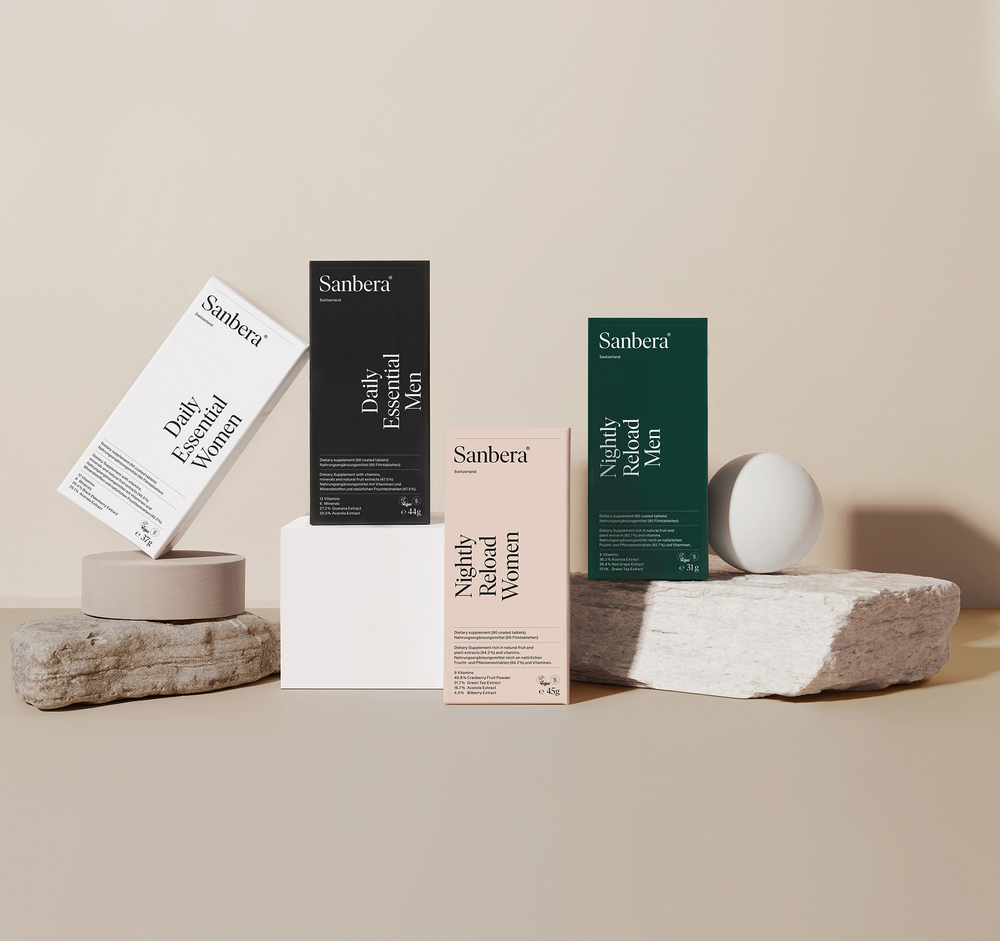
Daily Essential Women and Daily Essential Men contain all nine of these nutrients. Eight of them are present at 15% or more of the daily nutrient reference value (NRV) per serving, the level required before a formula may carry the tiredness claim for that nutrient. Magnesium (56.2 mg) is just below that level, so we do not make the claim for magnesium. One daily serving (3 tablets) provides:
- Women: vitamin B2 1 mg (71% NRV), niacin 12 mg (75%), pantothenic acid 3 mg (50%), vitamin B6 1 mg (71%), folic acid 150 µg (75%), vitamin B12 1.87 µg (75%), vitamin C 43.1 mg (54%), iron 5.25 mg (38%), magnesium 56.2 mg (just under 15%).
- Men: vitamin B2 1 mg (71% NRV), niacin 8 mg (50%), pantothenic acid 4.5 mg (75%), vitamin B6 1.4 mg (100%), folic acid 100 µg (50%), vitamin B12 1.9 µg (76%), vitamin C 51.8 mg (65%), iron 3.5 mg (25%), magnesium 56.2 mg (just under 15%). Daily Essential Men also contains guarana, a natural source of caffeine.
The evening formulas, Nightly Reload Women and Nightly Reload Men, add seven of these nutrients again (the B vitamins and vitamin C), without iron, magnesium or caffeine.
Frequently asked questions
Which vitamin is missing if you are always tired?
Iron, vitamin B12 and folate are the most common nutrient-related causes. Only a blood test can tell you whether you are actually low in one of them.
How long does it take for vitamins to reduce tiredness?
If you are deficient, many people notice a difference within a few weeks of correcting it, although rebuilding iron stores can take two to three months. If you are not deficient, you should not expect a noticeable change.
Can I take B vitamins in the evening?
Yes. B vitamins do not act like caffeine. Some people prefer to take them in the morning, but there is no good evidence that they disturb sleep.
Does vitamin D help against tiredness?
Low vitamin D is common in winter in Central Europe, and doctors often check it when patients feel tired. However, vitamin D does not carry an authorised claim for reducing tiredness. Take vitamin D to cover a shortfall, not as an energy supplement.
Sources
- NHS: Tiredness and fatigue
- National Institutes of Health, Office of Dietary Supplements: Iron, Health Professional Fact Sheet
- National Institutes of Health, Office of Dietary Supplements: Vitamin B12, Health Professional Fact Sheet
- National Institutes of Health, Office of Dietary Supplements: Folate, Health Professional Fact Sheet
- European Commission: EU Register of nutrition and health claims
This article is for general information and does not replace advice from a doctor or pharmacist. Food supplements are not a substitute for a varied, balanced diet and a healthy lifestyle.