
Niacin (vitamin B3) is good for one thing above all: it lets your cells turn food into energy. Your body uses it to make NAD and NADP, coenzymes that more than 400 enzymes depend on. Niacin contributes to normal energy-yielding metabolism, normal psychological function, the normal functioning of the nervous system, the maintenance of normal skin and mucous membranes and the reduction of tiredness and fatigue. Adults need about 11 to 16 mg a day, which most diets provide. High-dose nicotinic acid is a different matter: it acts like a medicine and has side effects.
Key facts about niacin
- Daily need (D-A-CH reference values, 2015): 11 to 13 mg niacin equivalents for women and 14 to 16 mg for men, depending on age; 14 to 16 mg in pregnancy and 16 mg while breastfeeding.
- The nutrient reference value (NRV) on EU and Swiss labels is 16 mg.
- Your body can make niacin from the amino acid tryptophan: 60 mg of tryptophan gives 1 mg of niacin, counted as 1 mg niacin equivalent (NE).
- Safe upper levels for adults (EU Scientific Committee on Food): 10 mg a day for nicotinic acid and 900 mg a day for nicotinamide. The two forms behave very differently at high doses.
- Good sources per 100 g: chicken breast and roasted peanuts about 14 mg, canned tuna about 13 mg, sunflower seeds about 8 mg, wholemeal bread about 4.5 mg.
What does niacin do for the body?
Niacin is the starting material for NAD (nicotinamide adenine dinucleotide) and NADP. NAD carries electrons in the reactions that release energy from carbohydrates, fats and proteins. NADP is needed to build fatty acids and cholesterol and to keep the body's antioxidant systems working. NAD is also used in cell signalling and DNA repair.
In the EU and Switzerland, the following health claims are authorised. Niacin contributes to:
- normal energy-yielding metabolism;
- the reduction of tiredness and fatigue;
- normal psychological function;
- the normal functioning of the nervous system;
- the maintenance of normal skin;
- the maintenance of normal mucous membranes.
Niacin works closely with the other B vitamins. Vitamin B2, for example, is needed to make niacin from tryptophan; read what vitamin B2 does, or see the whole group in what each B vitamin does.
Does niacin give you energy?
Not in the way caffeine or sugar does. Niacin does not contain energy itself; it is part of the machinery that releases energy from food. If your intake is adequate, extra niacin does not make you feel more energetic. If it is low, tiredness can be one of the first signs. Our guide to vitamins for tiredness and fatigue covers the nutrients most often involved.
Nicotinic acid, nicotinamide and niacinamide: what is the difference?
"Niacin" is the umbrella term for two forms with the same vitamin activity:
- Nicotinic acid (sometimes called niacin in the narrow sense) widens blood vessels in the skin at doses from about 30 mg. This causes the typical "niacin flush": redness, warmth, itching or tingling, usually on the face and upper body, starting 15 to 30 minutes after a dose. That is why its safe upper level is only 10 mg a day.
- Nicotinamide, also called niacinamide, does not cause a flush. Its safe upper level is much higher, at 900 mg a day for adults. Niacinamide is also the name used for the skincare ingredient in creams and serums.
Products sold as "flush-free niacin" usually contain inositol hexanicotinate, which releases little free nicotinic acid. Do not use high-dose niacin products without medical advice.
How much niacin do you need per day?
The reference values for Germany, Austria and Switzerland (D-A-CH) are given in niacin equivalents and follow your energy needs:
| Group | Women | Men |
|---|---|---|
| 19 to under 25 years | 13 mg NE | 16 mg NE |
| 25 to under 51 years | 12 mg NE | 15 mg NE |
| 51 to under 65 years | 11 mg NE | 15 mg NE |
| 65 years and older | 11 mg NE | 14 mg NE |
| Pregnancy, 2nd / 3rd trimester | 14 / 16 mg NE | – |
| Breastfeeding | 16 mg NE | – |
Protein-rich foods count twice: they contain niacin and also tryptophan, which your body converts. That is one reason why a lack of niacin is rare in people who eat enough protein.
Which foods contain niacin?
Meat, fish, peanuts and wholegrains are the richest sources. Niacin from cereals is partly bound and less available than niacin from animal foods, but pulses, nuts and seeds still make a good contribution in a plant-based diet.
| Food | Niacin per 100 g (approx.) |
|---|---|
| Beef liver, cooked | 17 mg |
| Chicken breast, roasted | 14 mg |
| Peanuts, roasted | 14 mg |
| Tuna, canned | 13 mg |
| Salmon, cooked | 8 mg |
| Sunflower seeds | 8 mg |
| Wholemeal bread | 4.5 mg |
| Mushrooms | 3.5 mg |
| Green peas, cooked | 2 mg |
| Avocado | 1.7 mg |
Niacin is fairly stable during cooking but passes into the cooking water, so use it for sauces or soups where you can.
Is niacin linked to depression or mood?
Niacin contributes to normal psychological function. The link with mood comes from tryptophan: the body uses it both to make niacin and to make serotonin, a messenger involved in mood. Severe niacin deficiency (pellagra) causes psychiatric symptoms, including depression, anxiety and confusion, and these improve when the deficiency is corrected.
Whether extra niacin helps mood in people who are not deficient is a different question. Researchers have studied it, but there is no good evidence that niacin supplements relieve depression, and there is no established "niacin dose for depression". High doses can cause side effects. Depression is a medical condition: if your low mood lasts for more than two weeks, speak to your doctor. For nutrients and everyday habits that matter for wellbeing, see vitamins for stress and anxiety.
Niacin, cholesterol and blood pressure: what research shows
At doses of 1,000 to 3,000 mg a day, nicotinic acid raises HDL cholesterol and lowers LDL cholesterol and triglycerides. For decades it was prescribed as a lipid medicine. Two large trials, AIM-HIGH and HPS2-THRIVE, then found that adding high-dose niacin to statins did not reduce heart attacks or strokes, while side effects increased. Today it is rarely prescribed.
For blood pressure, some observational studies have linked a higher dietary niacin intake with a lower risk of high blood pressure. Such associations do not prove cause and effect, and niacin is not a substitute for medical care. These effects concern pharmacological doses, many times more than food or a multivitamin provides.
How much niacin is too much?
From food, you cannot get too much niacin. Problems come from supplements:
- Flushing with nicotinic acid from about 30 mg, sometimes with itching, headache or dizziness.
- Stomach upset, nausea and vomiting at higher doses.
- Liver damage with long-term intakes in the gram range, especially with slow-release nicotinic acid.
- Higher blood sugar and uric acid, which matters for people with diabetes or gout.
If you take medicines, have liver disease, diabetes or gout, or are pregnant, ask your doctor or pharmacist before taking more than a standard multivitamin.
Niacin deficiency: who is at risk?
Pellagra, the classic niacin deficiency disease, is known for the "three Ds": dermatitis (a rough, dark rash on sun-exposed skin), diarrhoea and dementia-like confusion. It is rare in Switzerland and Germany. According to the German Nutrition Society, it occurs mainly as a result of conditions that reduce intake, absorption or metabolism, such as alcohol dependence, anorexia, chronic diarrhoea or liver cirrhosis.
Niacin in Sanbera formulas
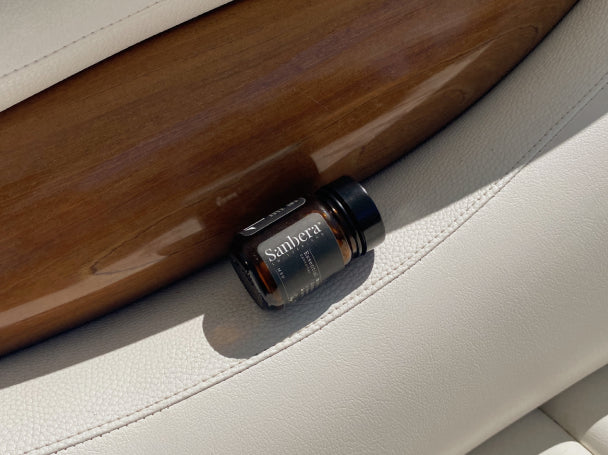
All four Sanbera formulas contain niacin as nicotinamide, the form that does not cause flushing. Per daily serving of three tablets, Daily Essential Women and Nightly Reload Women each provide 12 mg (75% NRV), Daily Essential Men and Nightly Reload Men 8 mg (50% NRV). Even combined, a Daily and a Nightly formula (24 mg for women, 16 mg for men) stay far below the 900 mg upper level for nicotinamide. All formulas are vegan and made in Switzerland, and they complement a varied diet rather than replace it.
Frequently asked questions
Is niacin good for you?
Yes, in normal amounts niacin is essential. Your body needs it every day to release energy from food, and it contributes to normal psychological function, the normal functioning of the nervous system and the maintenance of normal skin. A varied diet with protein, wholegrains, nuts or pulses usually provides enough. Very high doses of nicotinic acid, however, can cause flushing and other side effects.
Is niacin an antioxidant?
Not in the usual sense. Niacin is not an antioxidant itself, and there is no authorised antioxidant claim for it. Its coenzyme NADPH helps the body regenerate its own antioxidants, such as glutathione. Nutrients authorised to contribute to the protection of cells from oxidative stress are vitamins C, E and B2, zinc and selenium.
Is niacin the same as niacinamide?
Both are forms of vitamin B3 with the same vitamin activity, but they are not identical. Niacinamide (nicotinamide) does not cause a flush and has a safe upper level of 900 mg a day for adults. Nicotinic acid causes flushing from about 30 mg, so its upper level is 10 mg a day. Niacinamide is also the skincare ingredient in many serums.
Is niacin good for your skin?
Niacin contributes to the maintenance of normal skin and mucous membranes; a severe deficiency causes the rough rash of pellagra. Studies on niacinamide creams and serums concern products applied to the skin, so their results do not transfer to tablets. Our article on vitamins for your skin explains which nutrients matter.
When should niacin be taken?
Take niacin with a meal. Food improves tolerance, and with nicotinic acid a meal can soften the flush. The time of day matters less than taking it regularly. In a multivitamin, follow the pack: Sanbera Daily Essential is taken after breakfast or lunch, Nightly Reload in the evening. Avoid alcohol and hot drinks with nicotinic acid, as they can intensify flushing.
Does niacin support the immune system?
There is no authorised immune claim for niacin. The nutrients that contribute to the normal function of the immune system are vitamins A, C, D, B6 and B12, folate, iron, zinc and selenium. Niacin's authorised roles are energy-yielding metabolism, psychological function, the nervous system, skin, mucous membranes and the reduction of tiredness and fatigue.
Sources
- National Institutes of Health, Office of Dietary Supplements: Niacin, Health Professional Fact Sheet
- EFSA Panel on Dietetic Products, Nutrition and Allergies (2014): Dietary Reference Values for niacin
- EFSA (2006): Tolerable upper intake levels for vitamins and minerals (including the Scientific Committee on Food opinion on nicotinic acid and nicotinamide)
- German Nutrition Society (DGE): Reference values for niacin
- HPS2-THRIVE Collaborative Group (2014): Effects of extended-release niacin with laropiprant in high-risk patients, New England Journal of Medicine
- European Commission: EU Register of nutrition and health claims
This article is for general information and does not replace advice from a doctor or pharmacist. Food supplements are not a substitute for a varied, balanced diet and a healthy lifestyle.