
No supplement has been shown to reliably relieve hot flushes or other menopause symptoms; the North American Menopause Society does not recommend herbal remedies or supplements for hot flushes because the evidence is lacking. Where nutrition clearly matters in menopause is bone health and general nutrient supply: enough calcium and vitamin D, adequate protein, and vitamin B12 as absorption declines with age. If symptoms affect your daily life, the most effective options are discussed with a doctor or gynaecologist.
Key facts: menopause and nutrition
- Menopause is confirmed after 12 consecutive months without a period. Most women reach it between 45 and 55 (WHO).
- Perimenopause, the transition before it, often begins in the 40s, can last several years and ends one year after the final period.
- Falling oestrogen speeds up bone loss, and the WHO names menopause-related loss of bone density as a significant contributor to osteoporosis and fractures.
- Calcium: EFSA sets a reference intake of 950 mg a day for adults from 25. Vitamin D: 15 µg a day (EFSA); Swiss recommendations advise 20 µg (800 IU) from age 60.
- Iron: the reference intake falls from 16 mg a day before menopause to 11 mg after it (EFSA), so many women need less iron once periods stop.
What menopause supplements actually work?
For hot flushes and night sweats, the honest answer is: none that are reliably proven. The 2023 position statement of the North American Menopause Society on non-hormonal therapy reviewed the evidence and does not recommend supplements or herbal remedies for these symptoms. The treatments with the best evidence are hormone therapy and some prescription non-hormonal options, which a doctor can weigh against your personal medical history.
Popular botanicals in menopause products include:
- Soy and red clover isoflavones ("plant oestrogens"): study results are inconsistent and effects, where found, are small.
- Black cohosh: trials show mixed results, and rare cases of liver problems have been reported.
- Schisandra, evening primrose oil, sage and others: the evidence is limited to small or low-quality studies.
That does not mean nutrition is irrelevant. Menopause changes what your body needs over the long term, especially for your bones and muscles, and that is where food and, if needed, targeted supplements have a clear role.
Which vitamins and minerals matter in menopause?
| Nutrient | Why it matters in and after menopause | Reference intake (adult women) |
|---|---|---|
| Calcium | Needed for the maintenance of normal bones | 950 mg |
| Vitamin D | Contributes to normal absorption and utilisation of calcium and to the maintenance of normal bones and muscle function | 15 µg; 20 µg from 60 (Swiss recommendation) |
| Protein | Contributes to the maintenance of muscle mass and normal bones | 0.83 g per kg body weight |
| Magnesium | Contributes to the maintenance of normal bones | 300 mg (EFSA adequate intake) |
| Vitamin B6 | Contributes to the regulation of hormonal activity and to normal psychological function | 1.6 mg |
| Vitamin B12 | Absorption often falls with age; contributes to the reduction of tiredness and fatigue | 4 µg |
| Iron | Need falls after periods stop | 11 mg after menopause |
Calcium and vitamin D for your bones
Dairy products, calcium-fortified plant drinks, calcium-rich mineral water, tofu set with calcium, almonds and green vegetables such as kale and broccoli are good calcium sources. Food usually covers more than you might think; see calcium sources and daily needs. Vitamin D is harder: in winter the sun north of the Alps is too weak for your skin to make it, so many women need a supplement, at the latest from 60. Read more about what vitamin D really does. Weight-bearing exercise and strength training complete the picture.
Vitamin B6 and hormonal activity
Vitamin B6 contributes to the regulation of hormonal activity. This is an authorised description of a normal body function, not a promise that B6 relieves menopause symptoms. Most people get enough from potatoes, wholegrains, pulses, bananas and nuts. Our guide to vitamin B6 deficiency explains who may fall short. Long-term intake above 12 mg a day (EFSA's upper level) should be avoided.
Iron: often less, not more
Before menopause, heavy periods are the most common reason women run low on iron. Once periods stop, the need drops. Taking iron "just in case" is not advisable, so have your ferritin checked before supplementing. Our article on iron for women and men explains food sources and testing.
Weight, belly fat and joint pain in menopause: what helps?
Many women notice weight gain around the waist, joint aches and lower energy during the transition. Hormonal changes, a natural loss of muscle with age and changes in sleep all play a part. No supplement has been shown to reduce belly fat or joint pain in menopause. What does help is strength training two to three times a week, enough protein at each meal, plenty of vegetables and fibre, and less alcohol. These habits also matter for healthy ageing beyond menopause, as our article on the science of healthy ageing explains.
Are menopause supplements safe?
Most vitamin and mineral supplements at normal doses are safe, but herbal menopause products are a different matter:
- Black cohosh has been linked to rare liver problems.
- St John's wort, sometimes included for mood, interacts with many medicines, including hormonal products and blood thinners.
- Isoflavone products should be discussed with your doctor if you have had a hormone-sensitive cancer.
- Combining several products can push vitamin A, vitamin D, iron or B6 above safe levels.
See a doctor if symptoms affect your sleep, work or relationships, if you are under 45 and notice menopause signs, and always if you have any bleeding 12 months or more after your last period.
How Sanbera's women's formulas fit in
Sanbera's formulas are general, moderate complements to your diet, not menopause treatments, and they do not contain hormones or plant oestrogens. Per daily serving of 3 tablets:
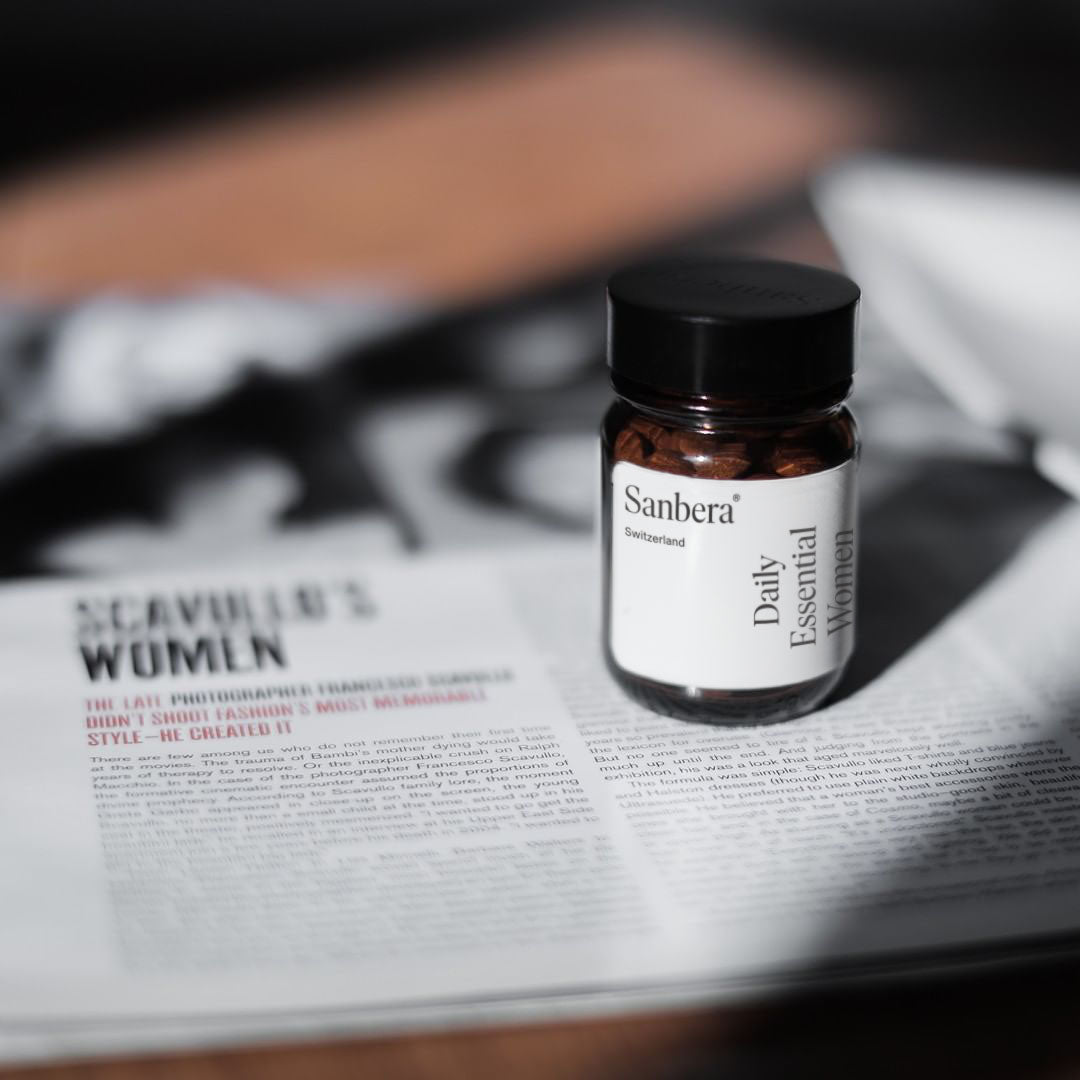
- Daily Essential Women: vitamin D 3.22 µg (64% NRV), calcium 120 mg (15% NRV), vitamin B6 1.05 mg (75% NRV), vitamin B12 1.88 µg (75% NRV), vitamin C 43.1 mg (54% NRV), iron 7 mg (50% NRV).
- Nightly Reload Women: vitamin C 43.1 mg (54% NRV), vitamin B6 0.7 mg (50% NRV), vitamin B12 1.88 µg (75% NRV), folic acid 150 µg (75% NRV), with cranberry, acerola, bilberry and caffeine-free green tea extract. It is taken in the evening.
Vitamin B6 contributes to the regulation of hormonal activity. Vitamin D contributes to the maintenance of normal bones and calcium is needed for the maintenance of normal bones. Vitamins B6, B12, C and folate contribute to the reduction of tiredness and fatigue. Please note the limits: 120 mg of calcium and 3.22 µg of vitamin D are a small part of what you need for your bones, and if you are past menopause and already take iron, check your total iron intake with your doctor.
Frequently asked questions
Do I need supplements during menopause?
Not necessarily. If you eat a varied diet with enough calcium and protein, your main gap is likely to be vitamin D in winter, which Swiss recommendations advise supplementing from age 60. Vitamin B12 deserves a check if you eat few animal foods. Other supplements depend on your diet and blood tests rather than on menopause itself.
What is the best supplement for menopause?
There is no single best supplement for menopause symptoms; no vitamin or herbal product has been shown to reliably relieve hot flushes. For long-term health, vitamin D and enough calcium matter most for bones. If symptoms are troubling, talk to your doctor or gynaecologist about hormone therapy or non-hormonal prescription options, which have much stronger evidence.
Which vitamins are good for menopause?
Vitamin D contributes to the maintenance of normal bones and normal muscle function, vitamin B6 contributes to the regulation of hormonal activity, and vitamin B12 contributes to the reduction of tiredness and fatigue. Calcium, magnesium and protein contribute to normal bones. These describe normal body functions; they do not relieve menopause symptoms such as hot flushes.
Are menopause supplements safe?
Vitamins and minerals at normal doses are generally safe, but check total amounts across all products. Herbal products carry more risk: black cohosh has been linked to rare liver problems, and St John's wort interacts with many medicines. If you take medication or have had a hormone-sensitive cancer, ask your doctor before taking any menopause product.
When should you start taking menopause supplements?
There is no fixed starting point. Perimenopause, often from the mid-40s, is a good time to review your diet for calcium, vitamin D and protein, and to start or keep up strength training for your bones. From 60, Swiss recommendations advise a daily vitamin D supplement of 20 µg. Anything beyond that should follow your needs.
Sources
- World Health Organization: Menopause, fact sheet
- The North American Menopause Society (2023): The 2023 nonhormone therapy position statement of The North American Menopause Society, Menopause
- National Center for Complementary and Integrative Health (NCCIH): Menopausal symptoms: in depth
- NHS: Menopause
- European Food Safety Authority (EFSA): Dietary Reference Values finder
- Swiss Federal Food Safety and Veterinary Office (FSVO/BLV): Need for food supplements
This article is for general information and does not replace advice from a doctor or pharmacist. Food supplements are not a substitute for a varied, balanced diet and a healthy lifestyle.