



Reviewed by Dr. med. Sina Havakeshian
Sexual health is an integral part of overall wellbeing. It is influenced by far more than libido alone: energy levels, circulation, hormonal function, nervous-system health, emotional wellbeing, sleep, stress, relationships and reproductive health can all play a role.
Nutrition belongs in that bigger picture. Vitamins and minerals do not act as instant solutions for low libido or sexual difficulties. Rather, they provide the micronutrients the body needs for essential processes involved in energy metabolism, hormone production, blood formation, nerve function, antioxidant protection and reproductive health. When nutritional needs are not adequately met, addressing those gaps can be an important part of supporting the body's normal function.
This is why sexual wellness is better understood as part of whole-body health, and why a nutrient-dense diet is one of its foundations.
What is sexual health?
Sexual health is broader than sexual performance or the absence of sexual dysfunction.
The World Health Organization describes sexual health as a state of physical, emotional, mental and social wellbeing in relation to sexuality. It is relevant throughout life and encompasses much more than reproductive function alone.
In practical terms, sexual wellbeing can involve:
- sexual desire and arousal
- comfortable and pleasurable sexual experiences
- reproductive and fertility health
- hormonal and physiological function
- cardiovascular and circulatory health
- emotional wellbeing and body confidence
- healthy, respectful relationships
Because these systems are interconnected, supporting sexual health starts with supporting the body as a whole.
Can vitamins and minerals affect sexual health?
Yes, but usually indirectly and as part of a broader physiological picture.
Vitamins and minerals are essential for hundreds of biochemical processes. Some contribute to normal energy metabolism, others to the nervous system, blood formation, immune function, antioxidant protection or reproductive processes.
However, it is important to distinguish between supporting normal physiological function and treating a sexual-health problem.
A vitamin deficiency can contribute to poor health and, depending on the nutrient and individual circumstances, may be relevant to sexual or reproductive function. Correcting a deficiency is therefore meaningful. But taking more of a nutrient when nutritional status is already adequate does not automatically translate into greater libido, better sexual performance or increased fertility.
Sexual health is multifactorial. Nutrition is one important piece of the picture.
Which vitamins and minerals are important for sexual health?
There is no single “vitamin for libido”. Instead, several nutrients contribute to biological functions that intersect with sexual and reproductive wellbeing.
Among the most relevant are:
Vitamin A: Cell differentiation, vision and immune function. Important for normal reproductive and cellular function.
B vitamins: Energy metabolism, nervous-system function and cell metabolism. Support energy, neurological function and overall health.
Vitamin C:Antioxidant protection and collagen synthesis. Supports connective tissue, antioxidant defence and normal physiological function.
Vitamin D:Calcium metabolism, bone health and broader physiological regulation. Vitamin D status has been studied in relation to sexual and reproductive health.
Vitamin E:Antioxidant protection. Helps protect cells from oxidative damage.
Folate: DNA synthesis and cell division. Particularly relevant to reproductive biology and pregnancy.
Zinc: Enzyme activity, DNA/protein synthesis and reproductive processes. Important for normal reproductive and cellular function.
Selenium:Antioxidant defence and thyroid metabolism Relevant to protection from oxidative stress and reproductive biology
Magnesium: Energy production, muscle and nerve function Supports many processes involved in energy, nervous-system and muscular function
The key is not to view these nutrients in isolation. The body uses them as part of interconnected biological systems.
Vitamin A and reproductive health
Vitamin A is an essential fat-soluble vitamin involved in vision, immune function and cellular differentiation. It also has important roles in reproductive biology.
Rather than describing vitamin A as a direct libido enhancer, it is more accurate to understand it as part of the nutritional foundation required for normal cellular and reproductive function.
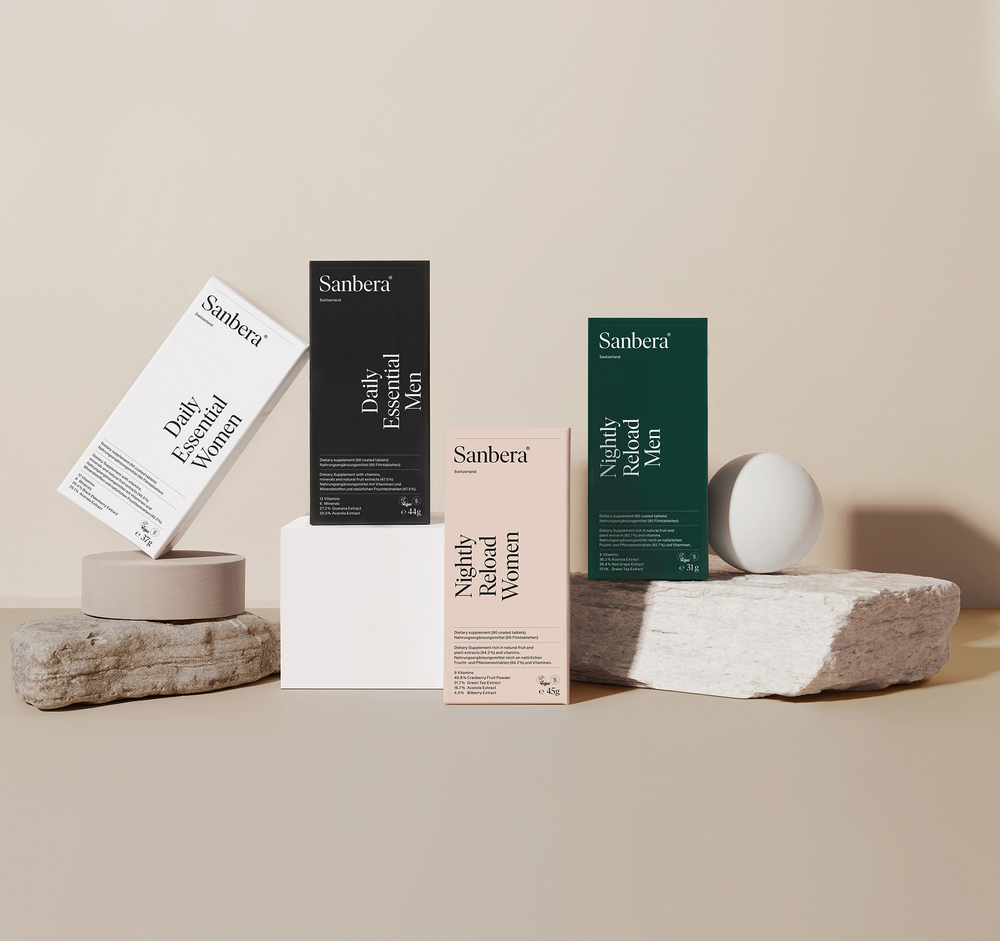
Sanbera's Daily Essential Women and Daily Essential Men formulas both contain vitamin A in the form of beta-carotene. The formulas are designed around a broader combination of essential vitamins and minerals rather than positioning any single nutrient as a standalone solution.
B vitamins: energy, nerves and overall health
The B-vitamin family includes several different nutrients, each with distinct functions.
Thiamine (B1), riboflavin (B2), niacin (B3), pantothenic acid (B5), vitamin B6, biotin, folate and vitamin B12 contribute to a wide range of metabolic and cellular processes, including energy metabolism, nervous-system function and normal cell division.
This matters because sexual wellbeing does not exist separately from everyday wellbeing.
Persistent fatigue, inadequate nutrition or poor overall health can affect how a person feels physically and emotionally, including their interest in intimacy. B vitamins help the body metabolise nutrients and support normal nervous-system and cellular function.
Folate is particularly relevant to reproductive health because it is essential for DNA synthesis and cell division.
B vitamins are therefore a key part of Sanbera's nutritional philosophy. All Sanbera supplements contain a carefully selected spectrum of B vitamins, recognising their fundamental role in energy metabolism, nervous-system function and everyday wellbeing. Rather than focusing on a single nutrient or a single outcome, Sanbera combines essential vitamins and minerals to provide a comprehensive nutritional foundation for daily health.
But the distinction matters: B vitamins support normal physiological function; they should not be presented as a direct treatment for low libido or sexual dysfunction.
Vitamin C, antioxidant protection and circulation
Vitamin C is best known for its role in immune function, but its biological importance extends much further.
It contributes to normal collagen formation, antioxidant protection and several metabolic processes. Collagen is an important structural component of blood vessels and connective tissues, making adequate vitamin C part of maintaining normal vascular and tissue health.
Healthy circulation is relevant to sexual function because sexual arousal involves physiological changes in blood flow. However, this does not mean that taking vitamin C automatically improves sexual performance.
The more accurate conclusion is simpler: maintaining adequate vitamin C supports normal cardiovascular, connective-tissue and antioxidant functions that form part of overall physical health.
We source vitamin C naturally from acerola extract in all of our formulas.
Vitamin D2 and sexual health
Vitamin D2 has received increasing attention in research on reproductive and sexual health. It is essential for calcium metabolism and bone health.
Vitamin D receptors are present in many tissues throughout the body. Research has also investigated associations between vitamin D2 status and sexual function.
For example, a systematic review and meta-analysis found an association between vitamin D deficiency and erectile dysfunction. However, it does not establish that vitamin D supplementation will resolve erectile dysfunction in every person.
This distinction is important.
Vitamin D is best viewed as part of overall nutritional and physiological health rather than as a “sex vitamin”.
Both Sanbera Daily Essential Women and Men formulas contain plant-based vitamin D2.
Vitamin E and protection from oxidative stress
Vitamin E is a group of fat-soluble compounds with antioxidant activity. Its primary nutritional role is helping protect cells from oxidative damage.
Oxidative stress is particularly relevant to reproductive biology because sperm cells, for example, are vulnerable to oxidative damage. This has led researchers to investigate antioxidant nutrients in the context of male fertility.
The evidence, however, remains mixed. Studies of antioxidant supplementation in male infertility have produced differing results, and larger clinical trials have not consistently demonstrated improvements in outcomes such as live birth.
That is why it is more scientifically responsible to say that vitamin E contributes to antioxidant protection rather than promising a fertility or libido benefit. :)
Zinc and reproductive health
Zinc is an essential trace mineral involved in hundreds of biological processes, including enzyme activity, protein synthesis, DNA synthesis and immune function.
It also has an established role in reproductive biology, particularly in male reproductive health and sperm function.
Research has found differences in seminal zinc concentrations between fertile and infertile men, and some studies suggest potential relationships between zinc status and semen parameters.
But supplementation is not a universal fertility solution. A large randomised clinical trial involving 2,370 couples seeking infertility treatment found that six months of folic acid plus zinc supplementation in male partners did not significantly improve semen quality or live birth rates compared with placebo.
The takeaway is therefore nuanced: zinc is essential to normal reproductive biology, but more zinc does not necessarily mean greater fertility.
Adequate intake matters. More is not always better.
Selenium and reproductive biology
Selenium is an essential trace mineral and a component of several proteins involved in antioxidant defence and thyroid metabolism.
Because oxidative stress can influence reproductive cells, selenium has attracted interest in fertility research, particularly in relation to sperm quality.
Antioxidant research in male fertility remains an evolving field. Some studies report improvements in selected semen parameters, while clinical outcomes such as pregnancy and live birth are less consistent.
For this reason, selenium should be understood as part of a balanced nutritional foundation, not as a standalone fertility treatment.
Our Daily Essential Women and Daily Essential Men both contain selenium as one of six essential minerals.
Magnesium, energy and the nervous system
Magnesium is involved in more than 300 enzyme systems and contributes to energy production, protein synthesis, muscle and nerve function, DNA synthesis and normal cardiovascular physiology.
These functions make magnesium relevant to overall physical wellbeing, but its relationship with sexual health is often overstated.
Magnesium is not a proven libido enhancer. Its relevance is more fundamental: adequate magnesium supports the physiological systems that allow the body to function normally.
That includes energy metabolism, muscular function and nervous-system activity, all of which form part of the broader context in which sexual wellbeing exists.
What about fertility?
Sexual health and fertility overlap, but they are not the same thing.
Sexual health encompasses physical, emotional, mental and social wellbeing in relation to sexuality. Fertility refers to the biological ability to conceive.
Nutrition can contribute to reproductive health, but fertility is influenced by a much wider range of factors, including age, reproductive anatomy, hormonal function, sperm and egg quality, underlying medical conditions and lifestyle.
Research into micronutrients and fertility is ongoing. Some nutrients, including zinc, selenium, folate and antioxidant vitamins, have been studied extensively. Yet the evidence does not support the idea that a supplement can independently treat infertility.
For example, a major randomised trial found no improvement in live birth rates from folic acid and zinc supplementation in male partners undergoing infertility treatment.
If pregnancy has not occurred after an appropriate period of trying, or there are concerns about reproductive health, medical assessment is more appropriate than relying on supplements alone.
Sexual health is more than nutrition
A sophisticated approach to sexual wellness has to go beyond micronutrients. Nutrition is one foundation, but sexual health is shaped by the interaction of many systems: hormones, circulation, energy metabolism, the nervous system, sleep, stress, emotional wellbeing and reproductive health.
This is precisely why Sanbera does not believe in a one-size-fits-all approach to supplementation.
Women and men have different physiological requirements, different nutritional priorities and different hormonal environments. Nutrient needs can also change across life stages, from reproductive years through menopause and beyond, or in response to changing lifestyles and demands. Sanbera was created around this principle: wellness should be tailored to the body it is designed to support.
The Daily Essential Women and Daily Essential Men formulas each combine 12 essential vitamins and 6 minerals with carefully selected plant extracts, while being formulated specifically around the nutritional requirements of women and men. The distinction is not about creating separate solutions for the sake of it; it reflects the reality that optimal nutrition is more nuanced than a universal formula.
Hormonal health is part of that picture. Vitamins and minerals do not simply “balance hormones” in isolation, nor should supplementation be viewed as a treatment for hormonal disorders. Instead, nutrients such as vitamin D, B vitamins, zinc, selenium, iodine and magnesium contribute to the normal physiological processes that support energy metabolism, nervous-system function, reproductive health and endocrine function. Providing the body with adequate micronutrients therefore forms part of creating the nutritional conditions in which these systems can function normally.
This is the foundation of Sanbera Science: not chasing a single symptom or promising a quick result, but understanding the body as an interconnected system.
Sanbera combines science with carefully selected plant-based ingredients and formulations tailored to her and him, creating a daily/nightly nutritional foundation designed to fit modern life. The philosophy is simple: when wellness is personal, the nutritional approach should be personal, too.
Sexual wellbeing ultimately belongs within that larger picture. It is not something to optimise separately from the rest of the body, but one expression of how well the physical, hormonal, emotional and nutritional dimensions of health come together.
Sleep
Sleep is not simply time away from the day. It is one of the body’s most important periods for restoration, regulation and recovery. Poor or insufficient sleep can affect mood, energy, stress resilience and cognitive function; all factors that can influence how we feel in our bodies, including our capacity for intimacy and sexual wellbeing.
For Sanbera, this makes sleep an essential part of the wider wellness equation. Nightly Reload Women and Nightly Reload Men were developed to complement the body's natural transition into the night, providing a considered combination of nutrients and plant-based ingredients selected to support relaxation, recovery and normal physiological function. Rather than treating sleep as an isolated concern, the formulas are designed to become part of a consistent evening ritual; one that gives the body and mind the space to slow down and recover.
This matters because hormonal health and sleep are closely connected. Sleep participates in the body's daily rhythms and regulation, while factors such as stress and disrupted sleep can influence how we feel and function. Supporting healthy sleep therefore forms part of a broader approach to maintaining physiological and hormonal wellbeing.
The Sanbera philosophy is not about promising a single solution for better sleep, nor about replacing the fundamentals of healthy sleep hygiene. It is about creating the right conditions for the body to recover consistently: a nourishing diet, regular movement, sufficient sleep, mindful stress management and targeted nutritional support where appropriate.
Nightly Reload is designed to complement that ritual; not replace it.
For women and men, the formulation is tailored to their respective nutritional considerations, reflecting Sanbera's belief that meaningful wellness should account for the differences between the female and male body rather than treating everyone as nutritionally identical.
Because a healthy intimate life is not built only in moments of intimacy. It is supported every day and every night through the quality of sleep, the nutrients we provide, the way we manage stress and the care we give our bodies over time.
Movement
Movement is one of the most fundamental expressions of health. It supports cardiovascular function, circulation, metabolic health, muscular strength and psychological wellbeing; all of which contribute to the physical foundations of sexual health.
But movement is not only about performance. It is about balance. The body that moves during the day is also the body that needs to recover at night. The energy required to train, work, walk, create and live fully depends on adequate nutrition; the ability to recover depends on sufficient rest, sleep and replenishment. These are not separate systems, but parts of the same continuous rhythm.
Nutrition sits at the centre of that relationship. Vitamins and minerals contribute to the physiological processes that allow the body to produce and use energy, maintain normal muscle and nerve function, protect cells from oxidative stress and support normal psychological and metabolic function. When combined with a varied, nutrient-dense diet, they form part of the nutritional foundation that enables an active body to function and recover.
This is why Sanbera sees wellness as a continuum rather than a collection of isolated goals.
Day is for living, moving and performing. Night is for slowing down, restoring, and recovering. Nutrition supports both.
The Daily Essential Women and Daily Essential Men formulas are designed to provide a comprehensive daily foundation of essential vitamins and minerals, tailored to the nutritional considerations of women and men. Nightly Reload Women and Nightly Reload Men extend that philosophy into the evening, complementing the transition from daytime activity towards rest and recovery.
Together, they reflect a more considered understanding of modern wellness: what we nourish during the day, how we move, how we manage stress, and how we recover at night are deeply interconnected.
And sexual wellbeing belongs within that same continuum. Healthy circulation supports physical function. Movement supports cardiovascular and metabolic health. Nutrition supplies the micronutrients required for countless physiological processes. Sleep allows the body and mind to recover. Emotional wellbeing influences desire and intimacy.
None exists in isolation. Sexual health is not a separate destination. It is part of the balance we build between how we live, how we move, how we nourish ourselves and how we recover, day after day, night after night.
Alcohol and smoking
Sexual wellbeing is also influenced by the choices we make repeatedly, often long before they become visible as symptoms.
Excessive alcohol consumption and smoking can affect cardiovascular health, circulation and overall physiological function: systems that are closely connected to sexual health. Over time, smoking in particular can impair blood-vessel function, while excessive alcohol consumption can affect sleep, mood, energy and other aspects of wellbeing. These effects can influence sexual function in both women and men.
The relationship is another reminder that sexual health cannot be separated from the health of the body as a whole.
At Sanbera, we believe that meaningful wellness is built through consistent choices rather than isolated interventions. A sophisticated approach to nutrition therefore does not exist to compensate for an otherwise unhealthy lifestyle. Supplements work best within a wider framework that includes a varied and nutrient-dense diet, regular movement, restorative sleep, stress management and moderation.
This is also where the role of micronutrients becomes more meaningful. Vitamins and minerals contribute to the normal functioning of systems affected by everyday lifestyle, from energy metabolism and nervous-system function to antioxidant protection and cardiovascular health. They provide nutritional support, but they cannot undo the effects of smoking, excessive alcohol consumption, chronic sleep deprivation or prolonged stress.
Sanbera's philosophy is therefore not about offsetting unhealthy choices; it is about strengthening healthy ones.
The aim is to create a daily nutritional foundation that complements the way you choose to live, supporting the body through the demands of the day and allowing wellbeing to be approached as a continuous practice rather than a quick correction.
Because sexual wellness, like health itself, is rarely determined by one decision. It is shaped by the accumulation of what we do, what we nourish, how we move, how we rest and how we care for ourselves over time.
Relationships and emotional wellbeing
Sexual health is not purely biological. Intimacy exists at the intersection of the physical and the emotional: communication, trust, emotional safety, body image, self-confidence and the quality of a relationship can all influence how we experience desire, connection and closeness. Even when the body is healthy, stress, insecurity, unresolved tension or simply the demands of modern life can affect our ability to feel present and connected.
This is why a complete understanding of sexual wellbeing cannot be reduced to hormones, nutrition or physical performance.
At Sanbera, we believe the same principle applies to supplementation. The body is a system, not a collection of isolated parts. Supporting one aspect of wellbeing while overlooking the systems around it misses the bigger picture.
This philosophy is at the heart of why Sanbera created Her & Him. Women and men share many fundamental nutritional needs, yet their bodies, hormonal environments, life stages and physiological requirements are not identical. Rather than developing a universal formula and expecting it to suit everyone equally, Sanbera takes a more considered approach: tailoring nutritional support to her and to him, while recognising that both are part of the same interconnected human system.
Daily Essential Women and Daily Essential Men provide a broad foundation of essential vitamins and minerals designed around these different nutritional considerations. Nightly Reload Women and Nightly Reload Men extend that philosophy into the evening, supporting the body's transition from the demands of the day towards rest and recovery.
Her & Him is not about separating women and men. It is about understanding them more precisely.
Because personalisation does not mean treating the body as a collection of individual targets. It means recognising the complexity of the whole system: physical health, nutritional status, energy, sleep, stress, hormonal function, emotional wellbeing and the relationships in which we live.
Ultimately, sexual wellbeing is part of that whole. It is reflected in how we feel in our bodies, how we connect with another person, how confidently we inhabit ourselves and how well our physical and emotional needs are supported.
Sanbera's role is not to promise that a supplement can create intimacy, desire or connection. It is to support the nutritional foundations of the system that allows us to live, move, recover, connect and feel well, with formulations thoughtfully created for her and for him.
Support the system with the system.
Can a multivitamin support sexual wellness?
A well-formulated multivitamin can help provide essential micronutrients as part of an overall healthy diet, particularly when dietary intake is inconsistent or nutritional requirements are increased.
It should not, however, be treated as a substitute for a varied diet or medical care.
Sanbera's approach is based on this broader principle. Daily Essential Women combines acerola and black elderberry extracts with 12 vitamins and 6 minerals, formulated around the nutritional needs of women. Daily Essential Men combines acerola and guarana extracts with 12 vitamins and 6 minerals, formulated around the nutritional needs of men. Both formulas provide nutrients including vitamins A, B1, B2, B3, B5, B6, B7, B9, B12, C, D and E, alongside calcium, magnesium, zinc, iron, iodine and selenium.
The philosophy is about building a consistent nutritional foundation that supports the body's essential functions every day.
The right way to think about vitamins, minerals and sexual wellness
The most useful question is not: “Which vitamin will increase my libido?” It is: “Am I giving my body the nutritional foundation it needs to function well?” That shift in perspective matters.
Sexual wellbeing is not controlled by one nutrient, one hormone or one supplement. It emerges from the interaction of physical health, circulation, energy, hormones, nervous-system function, emotional wellbeing, relationships, lifestyle and reproductive health. Vitamins and minerals are part of that foundation.
They help the body perform the essential biological processes on which everything else depends. When nutritional needs are met consistently, they become less about a quick result and more about supporting long-term wellbeing.
That is the role supplementation should play: not a shortcut to sexual performance, but a considered part of a healthier foundation.
Frequently asked questions
What vitamins are best for sexual health?
Vitamins A, B-complex, C, D and E can all contribute to the foundations of sexual health by supporting normal energy metabolism, nervous-system function, antioxidant protection, circulation and reproductive health. Rather than relying on one “best” vitamin, a balanced intake of essential micronutrients provides broader nutritional support. Individual needs vary according to diet, lifestyle, age and nutritional status, making a comprehensive and consistent approach to nutrition particularly valuable.
Can vitamins increase libido?
Vitamins are not proven to universally increase libido. If someone has a nutritional deficiency, correcting that deficiency may support normal health and wellbeing. Low libido, however, can have many causes, including stress, sleep, medication, hormonal changes, relationship factors and underlying health conditions.
Is vitamin D good for sexual health?
Vitamin D is important for normal health, and research has identified associations between vitamin D status and aspects of sexual function, including erectile dysfunction. However, current evidence does not establish vitamin D supplementation as a universal treatment for sexual dysfunction.
Is zinc good for male fertility?
Zinc is essential to normal reproductive biology and has been studied in relation to sperm health. However, supplementation does not necessarily improve fertility outcomes in all men. A large randomised trial found no improvement in semen quality or live birth rates from folic acid plus zinc supplementation in men whose partners were undergoing infertility treatment.
Which minerals are important for reproductive health?
Zinc and selenium are among the minerals most frequently discussed in relation to reproductive health, particularly male reproductive biology. Magnesium, iodine, iron and calcium also have important physiological roles, although their relevance varies according to individual nutritional status.
Can a multivitamin help with sexual wellbeing?
A multivitamin can provide essential vitamins and minerals that support normal physiological functions. It should be considered part of a broader healthy lifestyle rather than a treatment for low libido, erectile dysfunction, infertility or another medical condition.
What foods support sexual health?
There is no single “sexual health diet”. A varied diet rich in vegetables, fruit, legumes, whole grains, nuts and seeds, quality protein sources and healthy fats can help provide the nutrients required for overall health. Adequate hydration and moderation of alcohol also matter.
When should I speak to a doctor about sexual health?
Persistent changes in libido, erectile function, pain during sex, difficulties with arousal or orgasm, changes in menstrual or reproductive function, or concerns about fertility deserve professional assessment. Sexual difficulties can sometimes be an early sign of an underlying medical, hormonal, psychological or cardiovascular issue.
A stronger foundation for long-term wellbeing
Sexual health does not need to be separated from the rest of your health. The same foundations that support energy, cardiovascular function, hormonal health, nervous-system function and resilience also contribute to a healthy intimate life.
A balanced diet comes first. Movement, sleep, stress management and healthy relationships matter. And when your diet does not consistently provide everything your body needs, thoughtful supplementation can help fill nutritional gaps.
The goal is not to chase a single outcome. It is to support the body consistently, intelligently, and from within. Because sexual wellness is part of whole-body wellbeing.